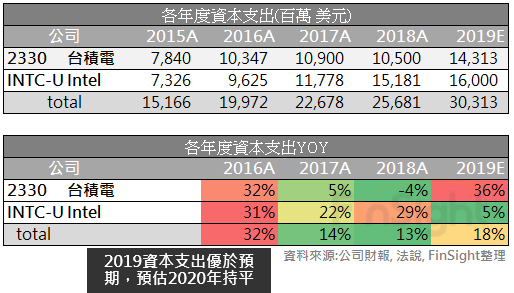
No equipment maker cut its outlook this quarter. Logic and foundry carry 2020 on 5G, and TSMC raised 2019 capex to $14 to $15 billion.
Our November 2019 notes on TSMC's Q3 2019 call and on Q3 2019 cloud capital spending (capex) read the direction of semiconductor investment off the chipmakers and off the large cloud companies (the hyperscalers). This time we go one level up the chain and put the same question to the equipment makers, whose third quarter 2019 calls have just finished.
Key takeaways
- Nobody cut their outlook this quarter, and several raised it.
- The revenue is still coming from logic and foundry, concentrated in 5G, leading edge nodes and shrinks, and that momentum holds into 2020.
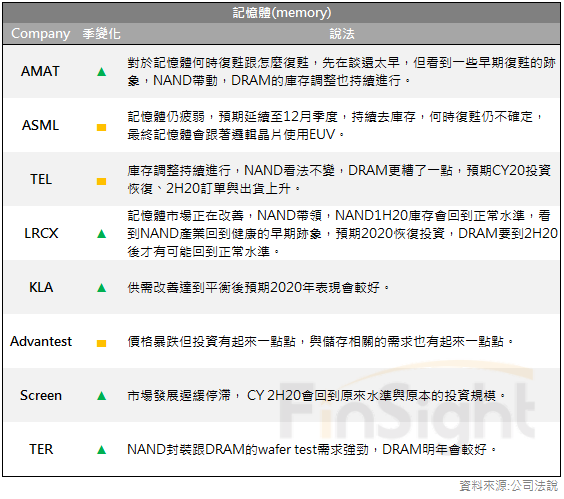
- In memory, everyone is focused on when spending turns back up. The first half of 2020 is possible, but neither the size nor the exact timing is known, and NAND supply and demand is in better shape than DRAM.
- China investment ran ahead of expectations in 2019 and demand should carry into 2020, with more memory spending starting to show up. Display may be bottoming, with 2020 better than 2019 but nothing that deserves the word recovery. 5G, AI and the internet of things (IoT) are all pulling equipment demand, and automotive should too in time, but it is still weak.
Equipment makers and semiconductor capital spending, side by side
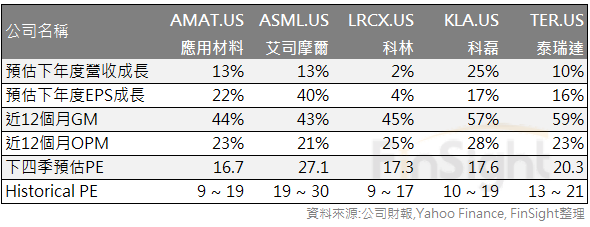
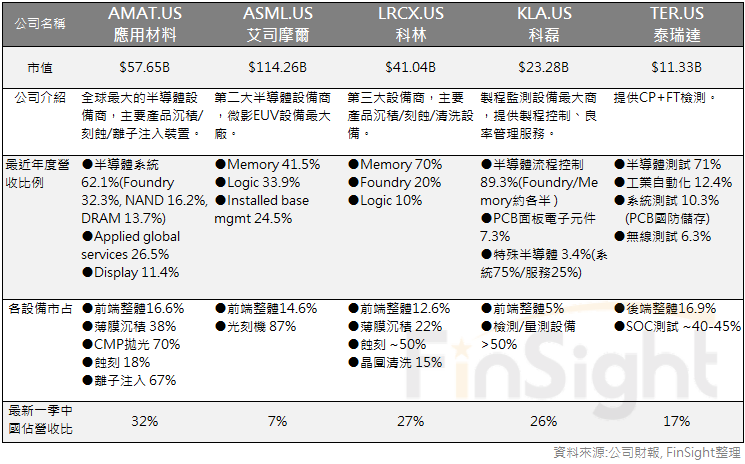
Semiconductor equipment is usually treated as the bellwether for the industry. The old way to read the cycle was the book-to-bill ratio, the ratio of orders received to product shipped, but it has not been published since early 2017. So alongside the capex numbers given on chipmakers' calls, we also cross-check the trend against what the equipment vendors say on their own calls. We have pulled together the comments from each vendor, plus profiles of the five major equipment makers we track (Table 1).
Logic and foundry
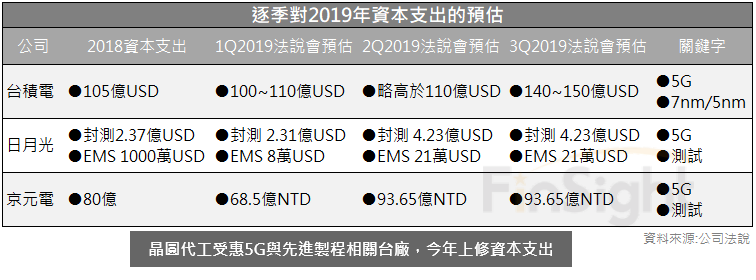
This is where capital spending has been revised up the most over the past six months, driven by 5G and leading edge nodes, and the vendors expect that momentum to carry into 2020.
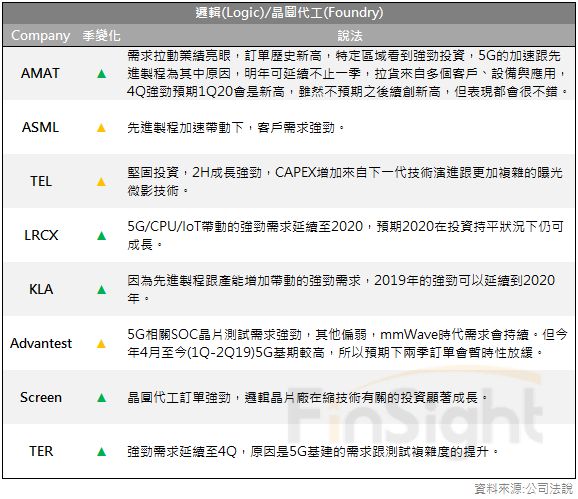
The Taiwan listed companies benefiting from the US-China trade war are concentrated in logic and foundry: TSMC (2330), the foundry; King Yuan Electronics (2449), which does chip testing; and ASE Technology Holding (3711), which does packaging and test. On its third quarter call TSMC raised capex to $14 to $15 billion, which matches what the equipment makers are reporting.
Memory
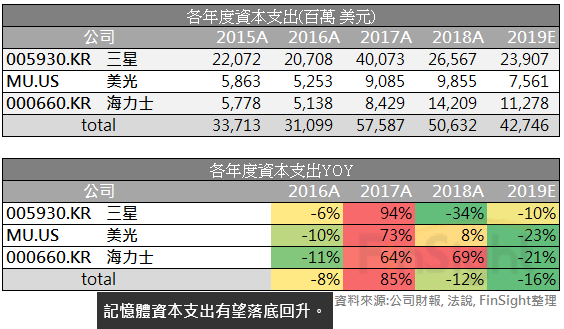
Memory is a large share of semiconductor investment, so the timing of its recovery matters. The market expects a recovery to start in 2020, with NAND turning up in the first half and DRAM in the second, but neither the timing nor the size of it is known.
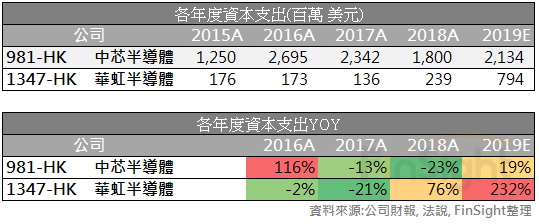
China semiconductor capital spending
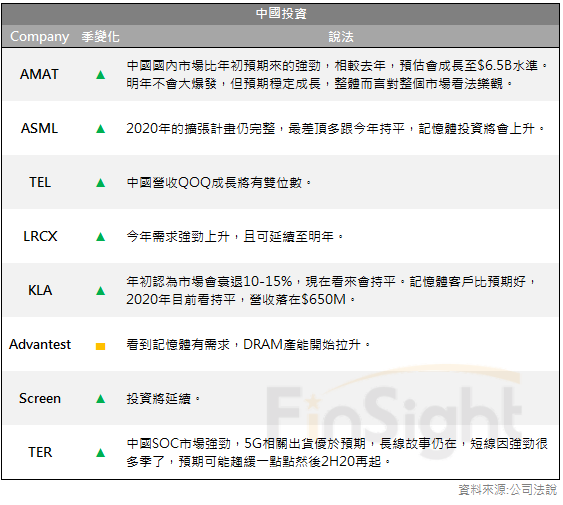
China's push to build up its own semiconductor industry has been an important growth driver for the equipment makers in recent years. Since the US-China trade war started, that support has turned into a drive to substitute domestic product for imported chips, and it is now the main trend. What the vendors say carries the same signal: equipment demand in China is strong.
Display
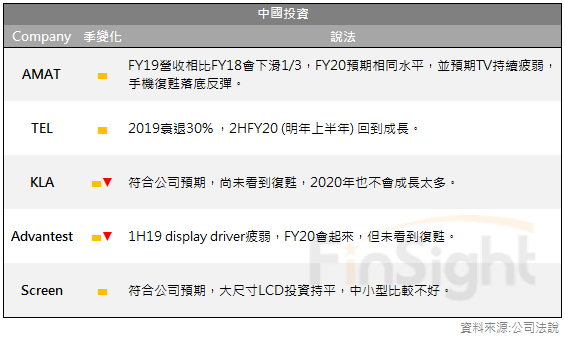
No equipment maker sees a meaningful pickup in display investment, though 2020 should be modestly better than 2019.
What EUV means for the equipment makers
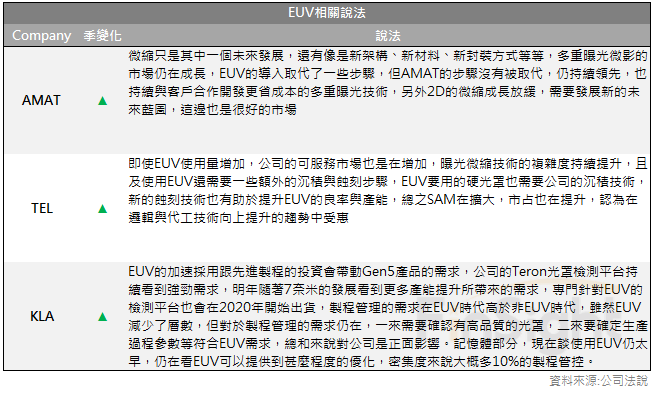
We also pulled together what each vendor said about the effect of EUV (extreme ultraviolet lithography) on its own business. EUV does replace some process steps, but advanced nodes need more masks and more steps, and that added complexity keeps demand for the existing tools intact. New etch techniques also help EUV yield and throughput. Read that way, as long as demand rises the pie keeps getting bigger for everyone, and there is less reason to worry about EUV. That is a change from our November 2019 note on TSMC's Q3 2019 call, where we argued that heavier EUV use means less demand for other etch and deposition tools.
What the equipment makers tell us about the semiconductor outlook
Logic and foundry demand from 5G and advanced nodes supported semiconductor investment this year, and the vendors expect that demand to continue in 2020. Everyone is waiting on a rebound in memory demand, with the general view that NAND turns up ahead of DRAM, and Chinese investment stays healthy as long as the policy support holds.
We will come back to each equipment maker's business in more detail in a separate note.