Equipment makers held their outlooks flat and turned cautious on second half 2020. Only China moved up, with SMIC taking a $2.25 billion state injection.
Capital spending (capex) at the large chipmakers is the bellwether for tech, and it feeds straight through to the equipment makers upstream. That is why we publish our quarterly chip equipment earnings roundup. Here is our read of the first quarter of 2020.
Key takeaways
- Almost nobody changed their view from the prior quarter. What changed is the uncertainty around demand: every vendor said the market is moving fast, so their second half 2020 outlooks are deliberately conservative.
- China is the one place where the numbers went up. Applied Materials and Lam Research now expect the China equipment market to land at the top of their range, about $3 billion above 2019, against a 2019 China market of roughly $6 billion to $6.5 billion.
- SMIC (Semiconductor Manufacturing International Corporation) took a $2.25 billion injection from China's national semiconductor fund, known as the Big Fund, and expanded its 2020 capital spending. That is what sits behind the equipment makers' China commentary.
- Logic and foundry investment stays high and memory demand keeps recovering, but the customer numbers are not all going up: the analyst estimate for TSMC's 2021 capital spending has been cut to $13.9 billion from a peak of $15 billion to $16 billion a year earlier.
The exercise every quarter is the same: read each vendor's comments against what it said three months earlier, because the change in view is the signal, not the level.
In our March 2020 roundup of the fourth quarter 2019 calls, the equipment makers mostly argued that the semiconductor cycle was recovering. The two caveats they flagged then were a wider set of Huawei sanctions and the risk that pandemic lockdowns would spread from supply into end demand.
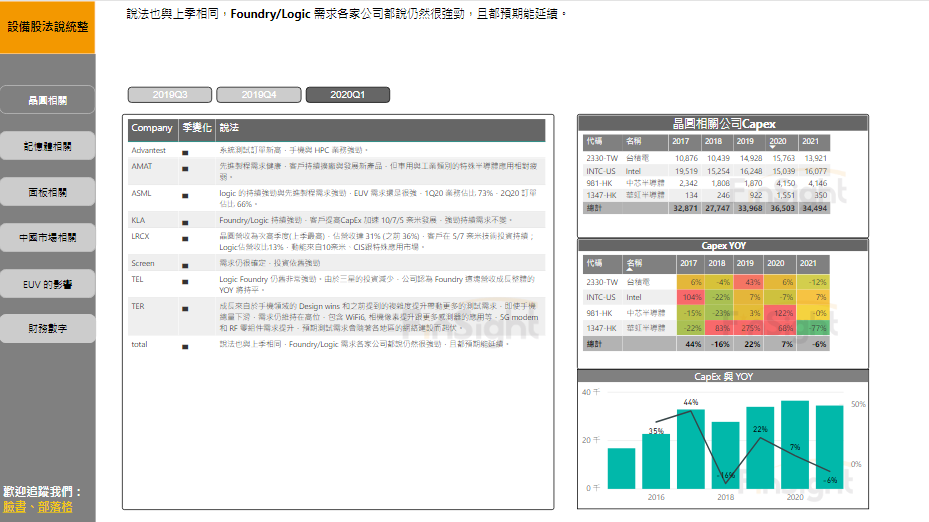
This quarter the views are close to unchanged. Demand uncertainty caused by the pandemic is higher, though, and everyone said conditions are changing quickly, so the second half of 2020 is guided conservatively.
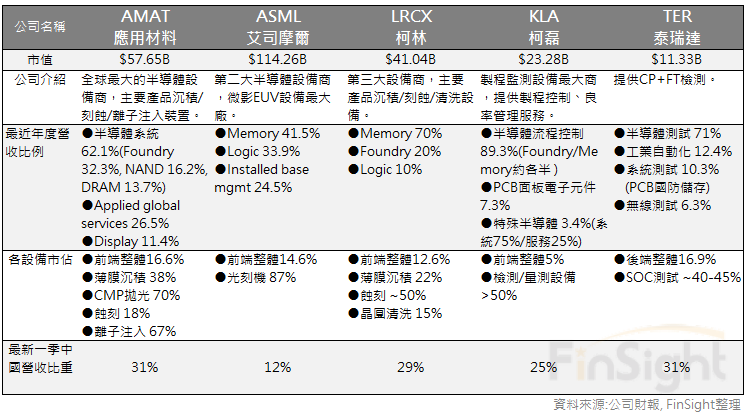
The five large equipment makers we track are profiled in Table 1, and their customers' capital spending sits next to their comments through the rest of this post.
Logic and foundry
The commentary is essentially the same as last quarter: no upgrade to the numbers, but the tone is confident. Every vendor said foundry and logic demand is still strong and expects that momentum to carry. Leading edge nodes are where the demand is, so high performance computing (HPC) and mobile are relatively strong, while automotive and industrial are weak.
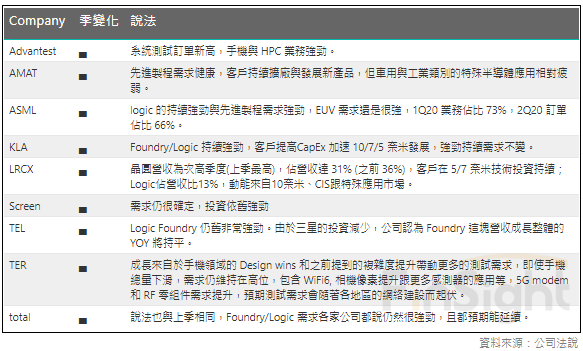
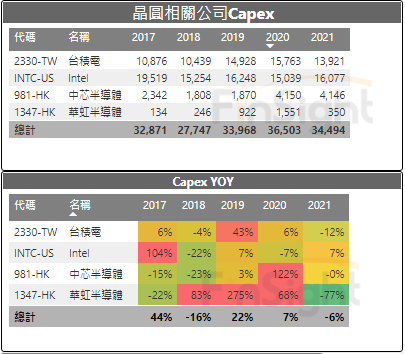
We put the customers' capital spending on the same page, so you can map chipmaker capex onto the revenue of the equipment makers upstream.
Capital spending at the foundries and logic makers stays high for both 2020 and 2021. The exception is TSMC, where the sell side has been marking its 2021 forecast down all year, from a peak of $15 billion to $16 billion down to $13.9 billion now.
Memory
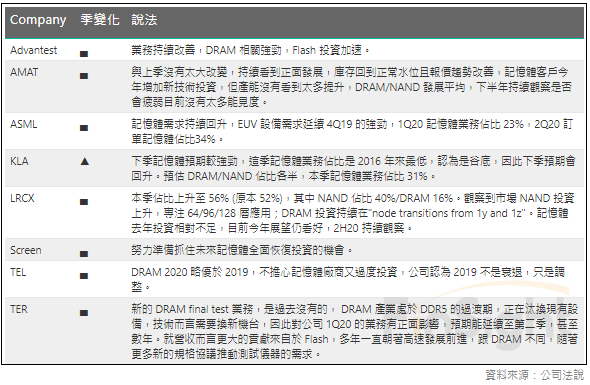
Not much different from last quarter here either. The line is the same across the group: demand keeps recovering.
The outlooks are positive, but they still have to be confirmed against whatever the pandemic does next. Teradyne is the one change worth flagging. It has moved into DRAM final test, a new business for the company, and it is more positive on the coming quarter because of it.
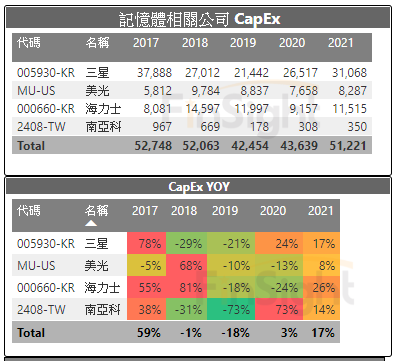
On the buyer side, memory capital spending turns back up in 2020 and the 2021 estimates are meaningfully higher. One caveat on the table: the Samsung figure is total capital spending including its foundry business, not memory alone.
China semiconductor capital spending
Import substitution, Beijing's push to replace imported chips with domestic ones, is still doing the work. Investment inside China keeps going, the vendors like the potential, and estimates were either held flat or revised higher. Applied Materials and Lam Research put an actual number on it: with SMIC raising capex, they now expect the China equipment market to come in at the top of their range, about $3 billion above 2019, against a 2019 China market of roughly $6 billion to $6.5 billion.
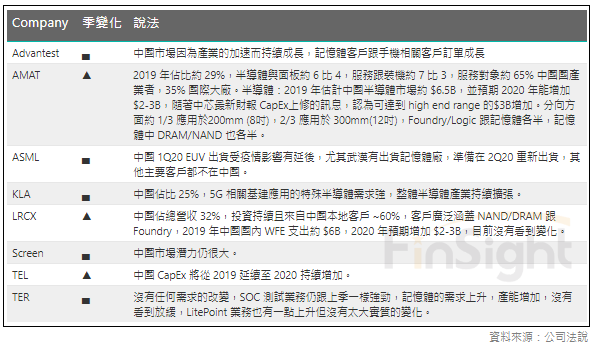
The US China tech war is what is paying for it. SMIC took a $2.25 billion injection from the Big Fund and expanded its 2020 capital spending. China is not holding back on technology investment in 2020, and that lines up with what the equipment makers are saying.
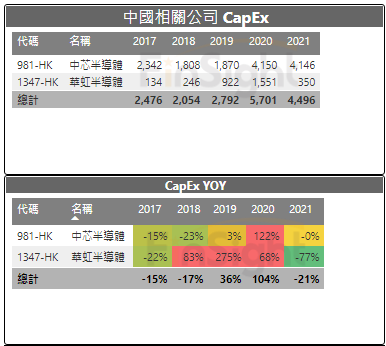
Display
The pandemic pushed out shipments to most of the Chinese customers. Applied Materials was the one optimist in the group; nobody else had much to say.
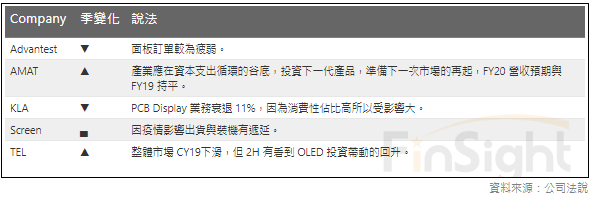
What the vendors said about EUV
ASML said demand for extreme ultraviolet (EUV) lithography is good in both logic and memory. No other vendor raised EUV at all. The core question on this round of calls was the pandemic and where it goes from here.
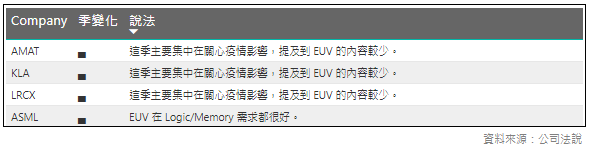
The financial data
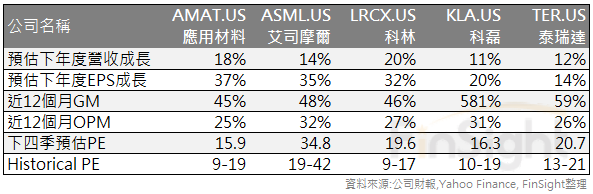
Last, the financial data for the equipment makers themselves.
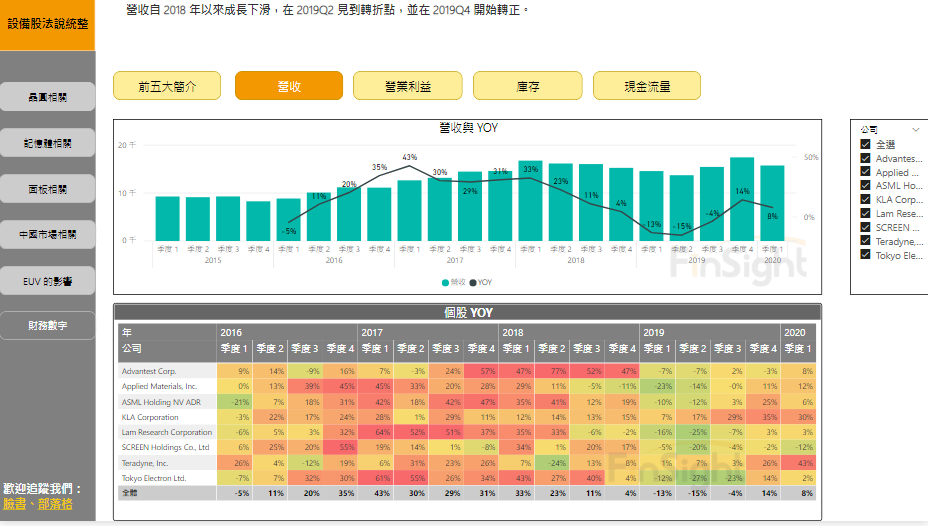
Bottom line: China is the only thing that moved
The equipment vendors said broadly what they said a quarter ago. Logic and foundry investment stays high, and memory sees a demand recovery in 2020. The big difference is the sharp jump in Chinese equipment demand. Under the tech war, the push to design US content out of the supply chain is driving more spending on technology, not less.