
Taiwan's April 2022 PMI turned new orders minus customers' inventories negative: the sell signal that ends a near three-year electronics inventory bull run.
Taiwan's April 2022 manufacturing purchasing managers index (PMI) just gave the sell signal that ends a near three-year run in electronics. The long-run direction is not in doubt: AI and 5G keep raising the amount of data the world creates, and that carries technology and semiconductor demand higher over time. The inventory cycle rides on top of that trend, and right now it is turning.
Key takeaways
- Taiwan's April 2022 manufacturing PMI, released in early May 2022, turned new orders minus customers' inventories negative. That is the sell signal, and it ends the electronics bull cycle that started with a buy signal in August 2019, on the second quarter 2019 filings.
- On past cycles, inventory days peak right after this signal and a formal inventory correction begins. Through that stretch, company earnings can still be revised lower.
- Free cash flow over the trailing four quarters at Taiwan electronic component makers has fallen to roughly zero while capital spending (capex) keeps climbing. That is another late-cycle marker, because manufacturers without growing cash flow eventually pull back on capex.
- The next buy signal requires inventory days to fall below their year-earlier level. First quarter 2022 inventory is still high, so on our estimate that is probably two more quarters away. Do not commit size early.
You cannot study semiconductors and the electronics supply chain and ignore the inventory cycle, which can drive two or three years of swings in the industry. In 2020 we published a run of posts on the inventory cycle, which matters a great deal for Taiwan electronics stocks. Inventory was in the early stage of destocking then, so we concluded the bull leg would run at least into the first half of 2021.
That bull cycle began with a buy signal in August 2019, on the second quarter 2019 filings, and has now given a sell signal almost three years later. Taiwan's PMI released in early May 2022 showed new orders minus customers' inventories turning negative for the first time in this cycle. History says that once this signal appears, inventory days peak and a formal inventory correction begins, and through that period company earnings can still be revised lower.
The sell signal has fired: the electronics inventory bull cycle is over
Look back at the history of the electronics inventory cycle and one thing stands out: judging where inventory levels sit within the cycle is what matters most.
Taiwan's electronic component makers are one of the largest supplier groups in the world, so their filings give us an early read on the inventory turn. Plot the year over year change in inventory days at Taiwan electronic component makers and the cycle is obvious.
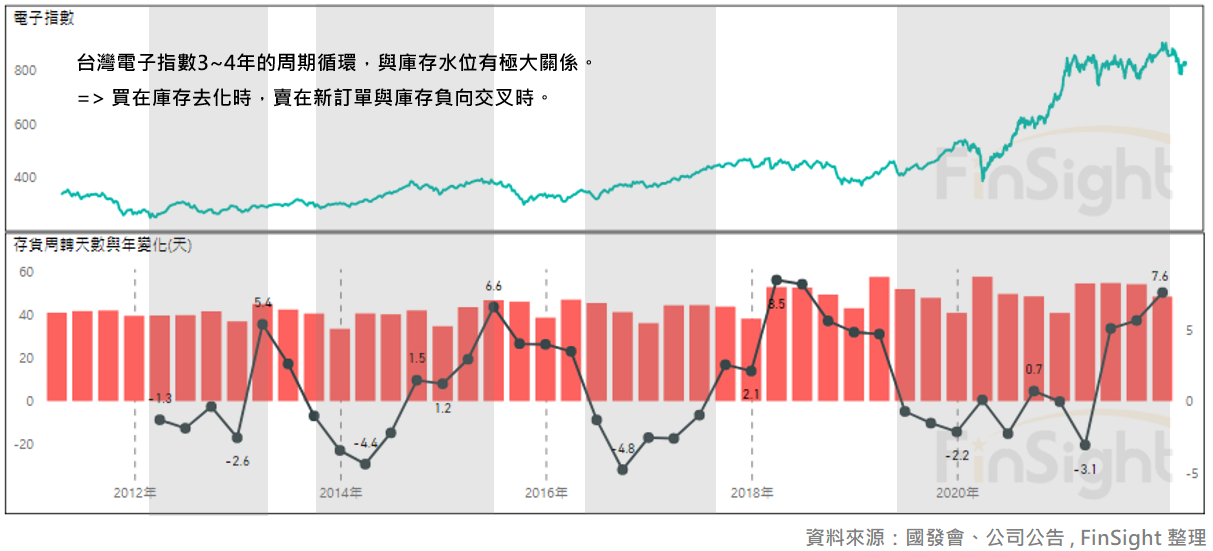
The TWSE electronics sector index (the electronics index) is the electronics subindex of the Taiwan Stock Exchange and carries the bulk of the market's capitalization. Taiwan's manufacturing PMI is published monthly by CIER, the Chung-Hua Institution for Economic Research; as with ISM, its sub-indices are diffusion readings around 50, so new orders minus inventories and new orders minus customers' inventories are spreads, not levels.
We watch the cycle from two angles.
- Taiwan electronics inventory, built from reported financial data. This is the angle that calls the buy signal.
- Taiwan new orders and inventory, built from macro data. This is the angle that calls the sell signal.
Our research points to a handful of key factors for reading the inventory cycle.
- Every bull leg of the inventory cycle starts once destocking is confirmed. When inventory days fall below their year-earlier level, manufacturers have clearly worked inventory down. Add to that the fact that technology is an industry with steadily rising long-term demand, and you get a clean entry point even when the companies themselves are not optimistic at the time. Once inventory has genuinely cleared, both a recovery in end demand and a restock are good for the industry, and the inventory cycle moves into its bull phase. This is where the easiest money in the cycle is made.
- When inventory starts building and inventory days rise above their year-earlier level, the industry is heading into its hot phase, and new order momentum often runs on for a while. It is exactly because manufacturers see healthy demand at this stage that they want to keep raising inventory and increasing capital spending. Here you have to judge whether overall demand is deteriorating and whether inventory levels have risen sharply. Either way, the back end of this stage is the final leg of the advance. At that moment manufacturers are still optimistic about the future.
- We do not take a forecasting stance here; we let the indicators tell us whether the bull run is extending. Once demand weakens or inventory days rise more than five days year over year, an inventory correction becomes possible.
- For the sell signal, look at PMI new orders minus customers' inventories. When new orders fall sharply while customers' inventories keep climbing, and the spread between the two turns negative, there is a high probability manufacturers are heading into destocking. Earnings estimates usually come down through that process, starting with the less competitive companies. When it finally reaches the strongest names, the inventory bear phase is usually close to done. When the sell signal appears, the electronics index typically still has a sizeable decline ahead of it.
- One caveat on confirmation. We had set out a further test, Taiwan electronic component and information and communication technology (ICT) exports turning negative year over year. This time exports look like a lagging indicator, so we are not waiting on them.
- After the sell signal, the next bull leg of the electronics cycle does not begin until inventory days fall below their year-earlier level again.
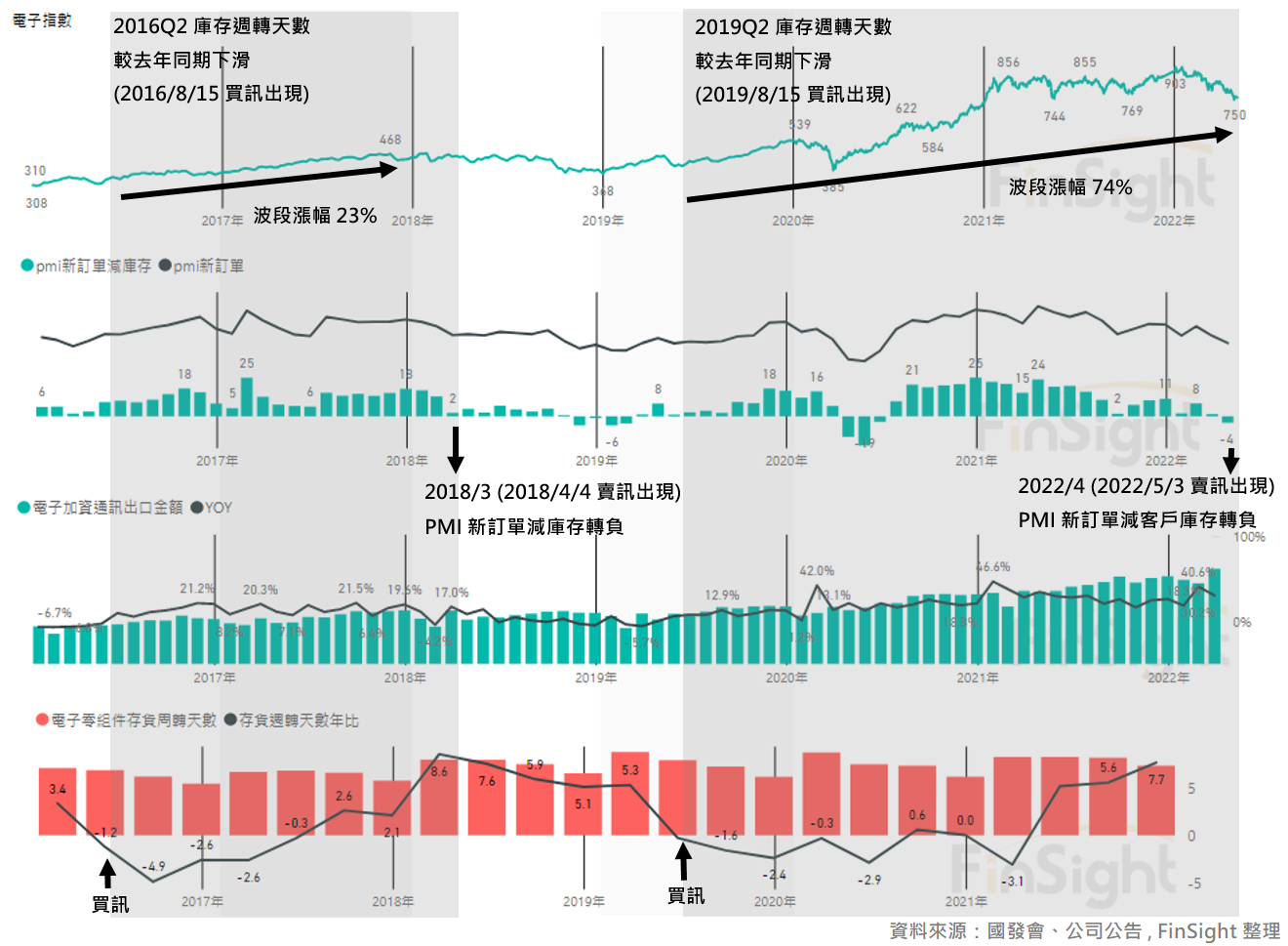
This bull leg started with a buy signal on the second quarter 2019 financial filings, published on August 15, 2019. The pandemic hit in 2020, but through it overall inventory days stayed in destocking territory. From the middle of 2021 onward we watched inventory build steadily in the filings, and yet it was not until the April 2022 PMI, released in early May 2022, that new orders minus customers' inventories formally turned negative and gave the sell signal.
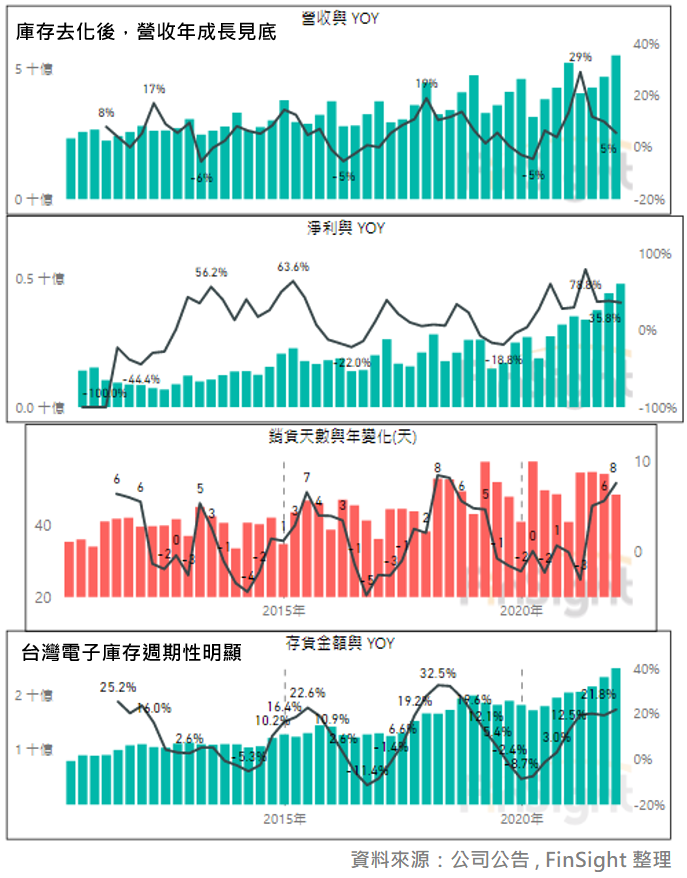
Put the aggregate financials of the component group alongside that and the cyclicality of inventory is even clearer: once inventory has cleared, revenue and net income usually turn higher together.

Last comes trailing four quarter free cash flow and capital spending, and we think this is another late-cycle marker. Capital spending keeps rising, and free cash flow over the trailing four quarters has now fallen to roughly zero. When a manufacturer's cash flow stops growing, its appetite for future capital spending gets squeezed.
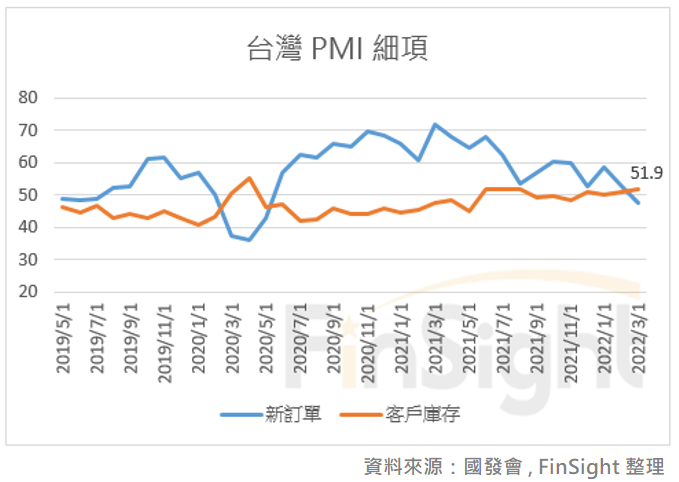
What makes this sell signal different is that it came from new orders grinding lower rather than from an inventory build alone. That leaves us more worried about the risk that demand cools further and inventory has to be worked down the hard way.
Even the best trend has a cycle, and knowing where you are in it tells you when to add and when to trim
In 2016 we started researching AI, cloud, 5G, and blockchain. Attending company technology conferences back then was the best way to see the future coming, above all NVIDIA's GTC developer conference, which told us again and again how large the cloud market would be and how broad data center demand would get. You came away from each one with the market sized bigger than when you arrived. After doing the work, we concluded the two biggest beneficiaries of the trend were NVIDIA and TSMC, and we have not changed our minds since.
Having caught the technology megatrend in 2016, though, we stumbled over the electronics inventory correction in 2018. By the middle of 2018 the Taiwan supply chain was already reporting order cuts, while US companies further up the trend, including NVIDIA, Applied Materials, TSMC, and AMD, stayed optimistic on the long-term picture. Only when they cut guidance during the fourth quarter earnings season did the inventory correction formally begin.
That was when we learned that even underneath a long-term megatrend, inventory swings create real cyclical risk. That experience is what started our work on the electronics inventory cycle, and after that buy signal appeared in August 2019, we took the position and rode an inventory bull cycle that ran longer and further than anyone expected.
Now the sell signal we have waited for has finally arrived, and the next job is to watch whether prices and company commentary follow the 2018 script.
For long-term investors, an inventory correction is not a bad thing. Underneath a long-running technology revolution, it is another chance to add at a good price.
The electronics inventory cycle is one of our core trading strategies, and we will keep flagging buy and sell signals as they come. When does the next buy signal show up? Inventory levels in the first quarter 2022 filings are still high, so we estimate it could take another two quarters before inventory days fall below their year-earlier level. Keep your powder dry. Waiting for a confirmed buy signal before committing size is the more efficient way to do this.