
TSMC's platform guidance implies about 20% growth in 2020. Data center is firm, smartphones carry virus and trade risk, and capex guidance looks low.
Semiconductor demand comes down to two buckets: smartphones (mainly 5G handsets) and data center. We covered both in our February 2020 flash note on MediaTek's 2020 5G handset forecast and in our post on what the December 2019 quarter at the US chipmakers said about data center demand (February 2020). Those two buckets matter more than anything else to TSMC's revenue, which is why we track them so closely. This post goes back through TSMC's January 2020 earnings call and then works out what the shifts in those two businesses mean for the company.
Key takeaways
- TSMC guided smartphone and high performance computing (HPC) revenue to grow more than 20% in 2020 and Internet of Things (IoT) revenue 15%. Those three lines alone put total growth above 17%, and after the call the market settled on about 20% for the year.
- Advanced nodes are the engine. Nodes at 16nm and below were 50.5% of 2019 revenue and should clear 60% in 2020, with 5nm at 10% and 7nm above 30%.
- The near term risk sits in smartphones. China's outbreak makes a first half cut to Chinese handset demand very likely, and with China at 19.5% of TSMC revenue, any further US squeeze on Huawei is a second problem on top of it.
- Capital spending (capex) guidance of $15 to $16 billion looks low to us. The board has already approved $13.3 billion of capital appropriations for the first half of 2020, $6 billion more than the same period a year earlier, while inventory days fell 10 quarter over quarter to 55 days.
TSMC guided 2020 growth of about 20%, with smartphones and HPC doing the lifting
TSMC's three largest revenue platforms in 2019 were smartphones (49%), HPC (30%) and IoT (8%). In the full year outlook given on the January 2020 call, smartphone and HPC growth are both above 20% and IoT is 15%. Those three platforms on their own carry more than 17% growth for the year, which is why the market came out of the call looking for roughly 20%.

TSMC expects the semiconductor industry excluding memory to grow 8% in 2020 and foundry to grow 17%, with its own growth ahead of foundry as a whole. The growth comes mostly from how fast data volumes are rising, which raises both the level of compute each job needs and how much compute gets used. Smartphones are the clearest case: the growth is not coming from unit shipments, it is coming from more silicon content in each handset.
More compute makes TSMC's advanced nodes more important. In 2019, nodes at 16nm and below were already 50.5% of revenue. For 2020 the company expects 5nm at 10% of revenue, 7nm above 30%, and 16nm revenue still growing, which should take the combined 16nm and below share past 60%.
Advanced nodes are the main growth driver, and leadership there is the reason TSMC grows faster than the industry. See our earlier post on Intel's CEO comments and TSMC's lead in semiconductors (December 2019).

China's outbreak leaves smartphones uncertain while data center rebounds steadily
By end market, demand splits into consumer facing, or business to consumer (B2C), and business facing, or business to business (B2B).
The B2C side sells to consumers, and smartphones sit here. TSMC's smartphone growth is concentrated in 5G handsets, and so far in 2020 the handset market carries two risks.
The first is demand falling because of the outbreak. A downward revision to first half demand in the Chinese handset market is very likely, and since many Chinese 5G phones were scheduled to launch in the first half of 2020, the hit to the Chinese handset makers is the more visible one. Apple's supply chain is different: the first quarter is a seasonally slow one to begin with, and while the lockdowns in China cannot be waved away, China was 16% of Apple's revenue in 2019, so the exposure is lighter than for the Android makers.
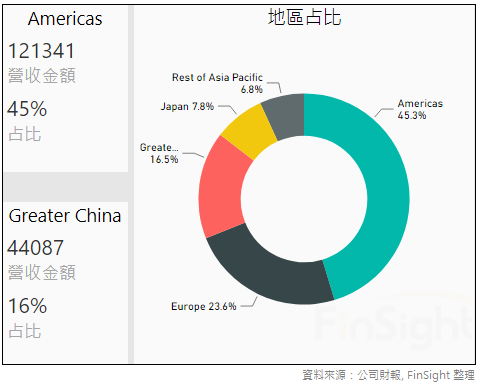
The second risk is political, from the US and China trade fight. If the US tightens the net around Huawei further, the China market, currently 19.5% of TSMC revenue, becomes a source of pressure. TSMC's guidance on the call holds the US and China revenue shares flat for 2020. In other words, growth in both regions is supposed to track the company's overall growth, so if the China number has to come down, the 20% total growth number is at risk.

The B2B side serves enterprises, and data center build out is a sizable part of TSMC's B2B market. Our February 2020 post on the US chipmakers' fourth quarter results confirmed that data center growth is strong, mainly because data volumes keep rising and enterprise demand for cloud keeps widening with them. In China, plenty of companies turned to remote work and cloud collaboration during the outbreak, which has pushed cloud usage up further than anyone planned.
For TSMC, smartphones are the larger growth driver, but as above, both Apple's suppliers and the Android makers take some level of first quarter cut. What happens to consumer demand from here depends on how the outbreak develops. If end demand is not damaged, the production shutdowns are only a short term effect and the full year impact should be limited.
The second growth driver, HPC, looks more certain and more stable, with data center growing strongly and enterprises leaning harder on cloud.
Look at AMD, an important TSMC customer, for a read on the same trend. At the UBS conference in December 2019, AMD said its share keeps climbing: over the prior 12 months it gained 5 points of desktop PC share and 4 points of notebook share, and it expects server share to go from 7% then to 10% by the second quarter of 2020.
Inventory days are falling while capex goes up
To supply the capacity advanced nodes need, TSMC guided 2020 capex to $15 to $16 billion. Set that against the capital appropriations the board approves each quarter and we think capex is likely to be revised higher. Appropriations include research and development spending, but they are mostly capex, so they work as a tracking tool: last year's approved appropriations of $17.3 billion sat only $2 billion above the $15.3 billion of capex actually spent for the year. Appropriations approved in the first half of 2020 already run to $13.3 billion, $6 billion more than the same period last year, so the odds of capex hitting the high end or being revised up are high.
While capex expands and capacity is added, inventory keeps falling. Inventory days fell 10 days from the prior quarter to 55, and 12 days from 67 a year earlier. Inventory falling while utilization rises in the seasonal peak says TSMC stays sold out for longer. The last time inventory fell this clearly was 2016 to 2017, and TSMC's shares stayed in an uptrend through that entire stretch.
Long term, demand for advanced nodes keeps rising; near term, watch the smartphone uncertainty
With shutdowns and lockdowns in China, the consumer facing business has to be marked down in the first quarter, and even assuming that demand gets pushed into the second quarter, how much comes back and when is still uncertain. The US and China dispute continues on top of that, so the China market, at about 20% of revenue, carries political risk. Even so, as long as demand itself is not damaged, we still want to own the technology upgrade and the rise in compute demand.
Step back to the industry level. AMD started taking share from Intel once it moved onto TSMC's advanced nodes, and Apple, HiSilicon (Huawei's chip design arm), MediaTek and NVIDIA all depend more heavily on those nodes each year, which has left advanced node capacity running close to full. That matches the inventory data above. The near term carries handset and trade risk, but with its lead in process technology, in heterogeneous integration, which puts chips built on different processes into one package, and in 3D packaging, which stacks them on top of each other, TSMC keeps the advantage over the long run as compute requirements rise and demand widens.