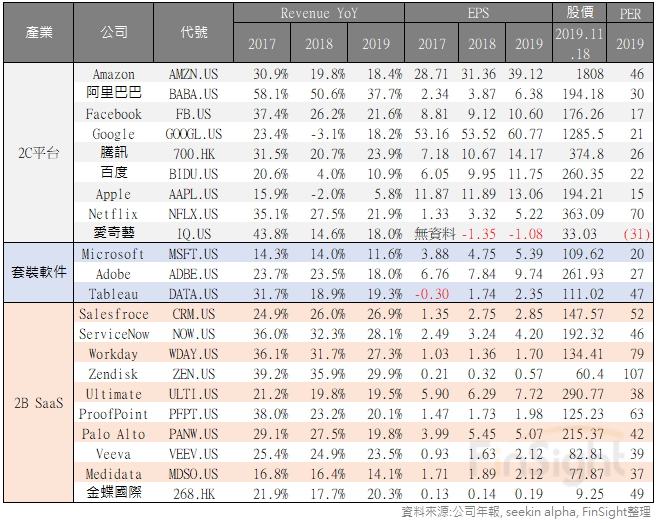
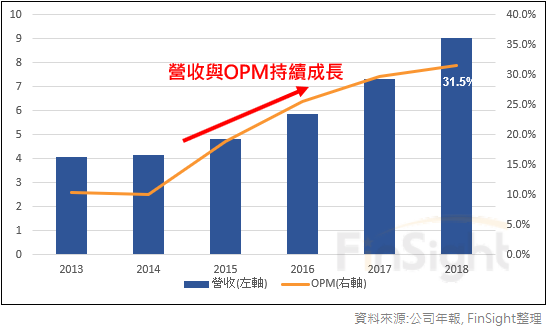
A map of consumer, packaged and enterprise SaaS. Adobe's operating margin went from 10.4% in 2013 to 31.5% in 2018 after it moved to subscription.
In The Subscription Series, Part 1, published in November 2019, we covered how the subscription model developed and the financial logic of investing in SaaS (software as a service). This post sorts the SaaS vendors into groups and works through what each group has to get right.
Key takeaways
- We split SaaS into three groups: consumer platforms, packaged software moving from perpetual license to subscription, and enterprise software, which further splits into horizontal and vertical.
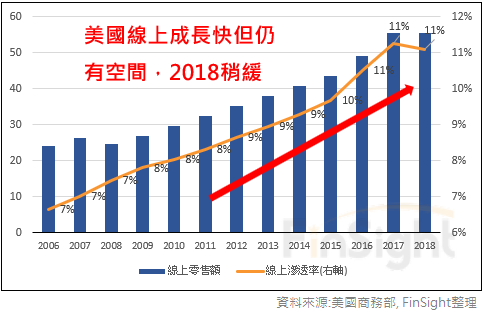
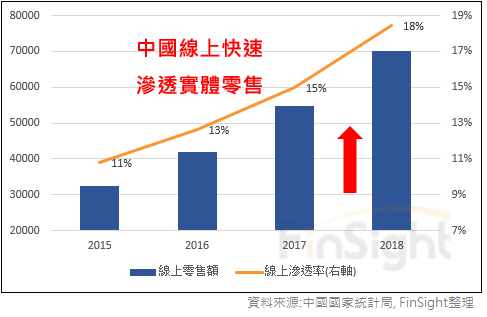
- Consumer platforms compete on network effects. US online retail penetration went from 8% in 2010 to 11% in 2018. China went from 11% in 2015 to close to 20% by 2019, after Amazon and Alibaba redrew retail in both countries.
- Adobe is the template for the packaged software conversion: Creative Cloud launched in 2013 at $49.99 a month against a $1,000 to $2,000 perpetual license, revenue has compounded at 17.4% a year since the 2013 dip, and operating margin went from 10.4% to 31.5% in 2018.
- In enterprise SaaS the leaders are already pulling away. Salesforce is the largest of the top three by market cap, has compounded revenue at more than 25% over five years, and trades at 56 times earnings.
Cloud changed how business runs: compute, AI and data
Internet applications have produced an enormous amount of data. IDC puts the world's data at 33 zettabytes in 2018, growing to 175 zettabytes by 2025. With compute taking off and AI advancing alongside it, that data is being used to improve production processes, optimize inventory and predict consumer behavior.
The precondition for that business model is capital-heavy cloud infrastructure. Over the past few years Amazon, Microsoft and Google, the large cloud companies (the hyperscalers), have all raced to spend on data centers and sell the capacity to enterprises and individuals. With that much IaaS (infrastructure as a service) capacity built and offered, software companies can store data in the cloud, use cloud compute to train AI on large data sets, and raise their own competitiveness that way.
Cloud also changed how software gets delivered. It moved software from a manufacturing mindset to a service mindset: the old business sold a product, the new one sells a service.
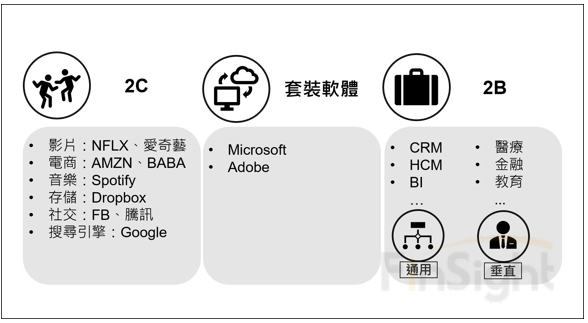
We split SaaS vendors into three groups.
- Consumer (B2C, business to consumer): the platform is the business model.
- Packaged software: moving from a one-time perpetual license to a subscription.
- Enterprise (B2B, business to business): split by how much customization is involved, into horizontal and vertical.
Consumer SaaS: build the platform, and the moat follows
The consumer SaaS business model is already everywhere in daily life.
People are used to shopping online, opening Spotify or Apple Music for music, checking Facebook or Instagram to see what friends have shared, going to YouTube in the evening for something interesting, or watching a series on Netflix.
For these companies the one thing that matters is building a strong, competitive platform ecosystem. Early on the entire focus is on scaling the user base far enough to get network effects.
A network effect means each additional participant makes the experience better for everyone already there. When all of your friends are sharing articles and daily life on a social platform, interaction inside that circle goes up. The marginal cost of adding a user to an internet platform is very low, so once the network effect kicks in, the competitive position gets stronger on its own.
That is why most platforms start out free. Once they have scale, they work out how to monetize the traffic, and the right method depends on the shape of that traffic and on the competitive setup. Facebook and Google mainly run a complements strategy: the product is free so the user base can grow, advertisers are drawn in, and the profit comes from a third party. Netflix and Spotify charge a subscription instead.
As scale grows, a company also has to ask whether the profit model needs to change: take a cut, charge a subscription, or insert advertising. Getting that adjustment right for the stage and the setting matters a lot to the competitive structure and to profits. Take YouTube: on top of the advertising model, it has been trying subscription, and in November 2019 it launched YouTube Premium in Taiwan, our home market, at NT$179 a month (New Taiwan dollars, roughly 30 to 31 per US dollar, so about US$6) for ad-free YouTube and YouTube Music.
Along the way the platform collects a large amount of user data and traffic. With that data in hand, AI goes back into optimizing the whole process, solving problems for customers and users and meeting their needs, which raises profit and cash flow, which funds more infrastructure and marketing. That is the platform flywheel.
Once the flywheel is turning, it changes the industry around it and forces competitors to change too. In e-commerce, Amazon in the US and Alibaba in China both used platform advantage to redraw their countries' retail maps. US online penetration went from 8% in 2010 to 11% in 2018, and China went from 11% in 2015 to close to 20% by 2019.
Packaged software: from perpetual license to subscription
The traditional way to sell software was a one-time perpetual license. The vendor had to guess how the user would use the product, and responded slowly when that changed. Pricing was usually tiered into a business version and a home version, and the user could not change what they had bought as their own needs moved.
For users, subscription packaged software is easier to manage, updates faster, costs less up front, and keeps improving.
- The plan can be adjusted to fit what the user actually needs.
- Because it runs in the cloud, the endpoint device requirement is lighter, and there is no large one-time purchase, which takes the lump-sum burden off the budget.
- Updates arrive faster.
- Service is continuous, and the product changes in response to what users ask for.
For the software company, the subscription service model brings back more data, which strengthens the product.
- Costs rise and revenue falls in the short run, but the long-run financial structure is better.
- The stable cash flow that comes later lets the company put more into research and development and widen its lead.
- Holding more of the key data makes it faster and more precise to improve features and lift the customer experience.
- Software companies lean toward selling direct and facing the customer themselves. Traditional software companies get about 70% of revenue through channel partners, against only 23% for SaaS companies, which means more pricing power and more control.
- Because the entry price is low, service and updates are continuous, and new features hit closer to the mark, users who would not pay before are converting to subscriptions, and piracy falls.
A good SaaS company runs a loop. More users bring more data, and that data builds a stronger ecosystem and a better user experience. Revenue and gross margin then rise together, cash flow grows, the company puts more into research and development and capital spending (capex), and that brings in more users again.
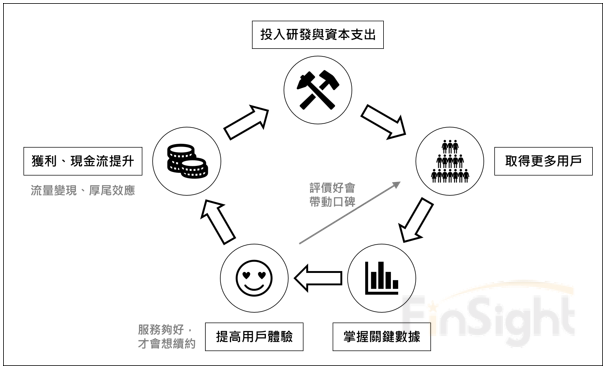
So the things to watch at a SaaS company are revenue, user growth, renewal rate and cash flow. Once users keep growing and the data has built an ecosystem, the company needs to widen what it serves, help customers succeed and raise loyalty, which lifts ARPU (average revenue per user).
Microsoft and Adobe are the two models of a successful packaged software conversion, and Microsoft's version is in Part 3 of this series. Adobe launched Creative Cloud in 2013 at $49.99 a month, against a perpetual license that had cost $1,000 to a bit over $2,000. Apart from a brief revenue decline in 2013, revenue has compounded at 17.4% a year since.
Selling a perpetual license leaned heavily on the sales channel. When a customer stopped buying, there was no way to know why or to do anything about it. Subscribing through the cloud connected Adobe directly to the customer: plans are more flexible, customers can subscribe to only part of the suite, patches can be pushed to the cloud for download at any time based on how people actually use the product, and Adobe offers hundreds of tutorials on top.
Cloud collaboration lets users edit across devices and lets teams share images and work, which builds a community. Adobe supports Behance, the largest online creative community in the world, where designers upload and share work and others can download it.
The conversion strengthened Adobe's cash flow and its growth, and operating margin has climbed every year, from 10.4% in 2013 to 31.5% in 2018. The stock is up nearly 7x from the start of 2013 through late 2019.
Enterprise software: the move to SaaS is accelerating
In enterprise SaaS the leaders' advantage is already showing, and the quality names in each area are worth watching.
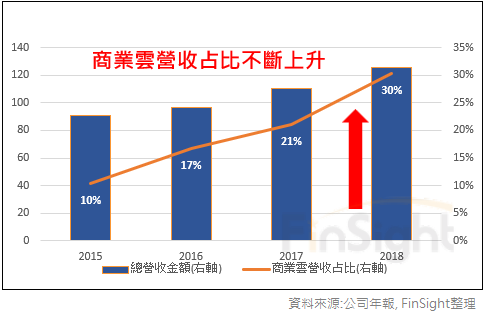
More and more enterprises are adopting SaaS, which affects their IT departments, how they store data and how they do business. Microsoft commercial cloud revenue has grown fast over the past few years, and from what the company says on its earnings calls, demand to move to cloud is very strong. For the enterprise, bringing in cloud software is changing what the company looks like.
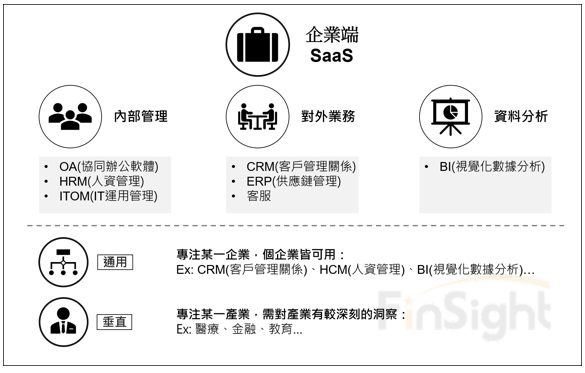
The biggest draw for an enterprise buying SaaS is efficiency. Software is changing how companies operate by attacking the pain points in specific internal settings, and those settings fall into a few groups.
- Internal management: OA (office automation and collaboration), HRM (human resource management), ITOM (IT operations management).
- External and business facing: CRM (customer relationship management), ERP (enterprise resource planning, covering the supply chain), customer service.
- Data analytics: BI (business intelligence, or visual data analysis).
By how much customization is involved, the software also splits two ways.
- Horizontal: focused on one function that any company can use (CRM, ERP, data analytics).
- Vertical: focused on one industry, which requires deep insight into that industry to identify and solve its pain points accurately (financial services, healthcare, restaurants).
The largest US-listed enterprise SaaS company by market cap today is Salesforce, founded by Marc Benioff, a former senior vice president at Oracle and one of the early evangelists of the SaaS idea. AppExchange launched in 2005 and let customers keep data and records in the cloud without owning the software, and add or remove functions to fit their own needs. Benioff called his own platform the end of software.
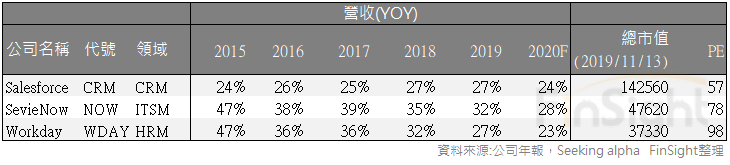
Salesforce has compounded revenue at more than 25% over the past five years. On valuation it trades at 56 times earnings, which in our view is not high against other SaaS names, and it is the only one of the three with more than a year of profits behind it. The number two by market cap, ServiceNow, turned profitable this year, and the number three, Workday, is expected to turn profitable in 2020.
There have been several acquisitions among SaaS companies in recent years, and the reason is to add services and move toward PaaS (platform as a service). A vendor that can deliver a one-stop service widens ARPU and customer stickiness, solves more pain points and simplifies management. So even though the enterprise group breaks into fine categories, owning the data and expanding quality services on a data driven basis should make the strong stronger.
When AI runs on connected devices, hardware matters as much as software
The rise of subscription is not only a change in how customers pay, it is a change in how the business is run. It ties what the vendor earns to whether the customer keeps getting value out of the product. That is how you stand out once everyone is selling much the same thing. Using the service idea well to help customers succeed forces competitors to change, and that changes the rules of the game.
This shift in thinking is not limited to software. Once the service concept runs all the way from the customer end back to the manufacturing end, every industry has to think about what service really means. It is the same point we made about Philips in Part 1: a hardware maker that uses technology to link the value delivery path in a creative and flexible way will find more latent demand, and will work harder on products that are better and last longer.
As 5G progresses, more data will come off connected devices running AI, and that is the next battleground for data. This kind of ambient computing, where AI runs quietly on the devices around the user, needs much more software and hardware working together, which makes the integrated hardware and software ecosystem more important.
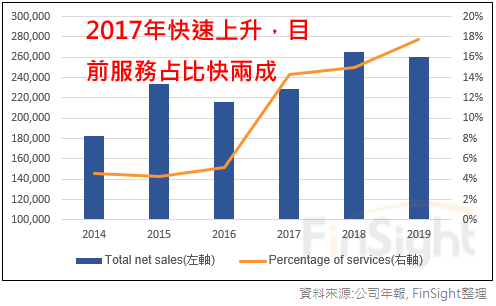
In early 2018 Google acquired the engineering team of HTC, the Taiwanese smartphone maker, for $1.3 billion, filling in its own hardware capability. And Apple, the phone company that owns a critical source of endpoint data, took services above 18% of revenue in 2019. Services includes paid subscription products such as the App Store, Apple Music, iCloud and Apple News Plus, and that growth has added fuel to Apple's revenue momentum. Software and hardware working together will be an important competitive factor from here.
We will keep tracking the companies that sit at that intersection, starting with Microsoft in Part 3.