
NVIDIA kept its February 2020 guidance at GTC on March 24. Data center demand is intact, inference volume is up 4x, and the hit is the 5% auto business.
NVIDIA is the key chip supplier behind AI, and its annual GPU Technology Conference, GTC, draws a large engineering audience, often comes with financial guidance or new products, and has become one of the set pieces of the tech calendar. The 2020 edition moved online because of the pandemic. NVIDIA used it to say that its two core businesses, data center and gaming, are not being hurt, and that the new 7nm products stay on schedule.
Key takeaways
- At GTC on March 24, 2020, NVIDIA did not change the financial guidance it gave on the February 13, 2020 earnings call. Demand looks intact in gaming and data center, and the 7nm products ship as planned.
- Inference, the work of running a trained model to answer a request, is the engine: volume ran 4 times the year-earlier level, the T4, NVIDIA's inference chip, has already passed the V100, its training chip, in units, and inference is now a steady double digit share of data center revenue.
- The pandemic damage is concentrated in autos, about 5% of revenue, plus small verticals such as oil and gas and financial services. Supply improved through March 2020, with shipments back to roughly 70% to 80% of normal by month end.
- The balance sheet is the cushion: about $11 billion of cash against $5 billion of total liabilities, of which $2 billion is long term debt with $1 billion maturing in 2021 and $1 billion in 2026, plus about $4 billion of expected fiscal 2020 cash flow.
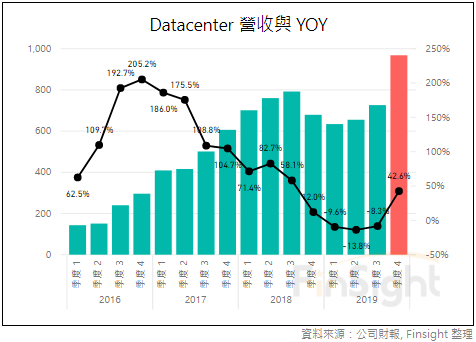
In our earlier post on fourth quarter earnings at the US chipmakers (February 2020), covering the fourth quarter of calendar 2019, NVIDIA's fiscal fourth quarter, we flagged how strong data center demand was, with NVIDIA's data center revenue accelerating to a record.
On data center, the company said at GTC that demand has not been affected. AI keeps moving forward, and both inference and deployed applications keep growing. On the other side, PC and notebook demand is strong because people are working from home, and that is helping to carry the business. The parts that actually got hit are autos, about 5% of revenue, and a few verticals that are small in the mix.
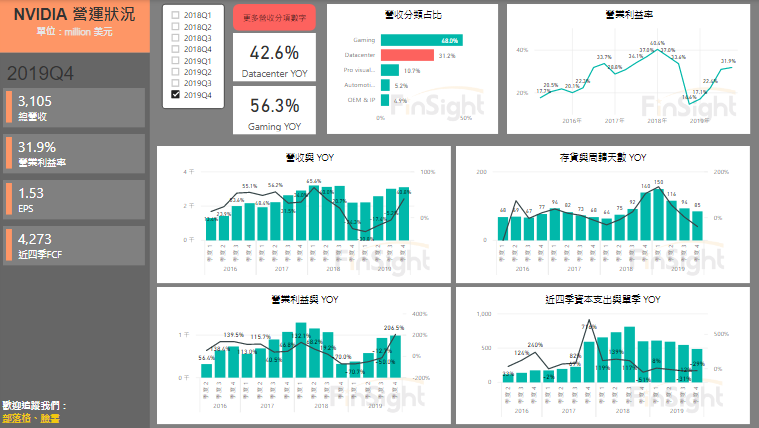
With the pandemic shutting large parts of the global economy, companies with a sound balance sheet and clean cash flow can absorb more of whatever the hit turns out to be. On that test NVIDIA scores well: we think its cash position is very safe and its balance sheet is high quality.
The figure below sets out NVIDIA's overall financial position alongside its revenue and profit.
The February 13, 2020 call: conversational AI, applications going live, more training and more endpoints
On that call, NVIDIA said data center growth accelerated again and revenue hit a new high, driven by breakthroughs in AI models, applications moving into production, a wider spread of vertical use cases, and more edge computing.
The company laid out four drivers of AI growth.
- Breakthroughs in AI models. NVIDIA said 2019 brought striking progress in deep recommender systems and natural language understanding. Natural language understanding is what made conversational AI take off, and running very large language models is a heavy workload that needs GPU inference to get high throughput at low latency. The very large models behind conversational AI carry 10 to 20 times the parameters of image models, and in special cases up to 100 times, which lifts GPU demand sharply.
- More inference volume. Deep recommenders and conversational AI both have to infer quickly across more parameters and more data, and that has made the inference business grow fast: volume was 4 times the year-earlier level. On the calendar third quarter 2019 call, the company said shipments of the T4, its inference-specific chip, had jumped and already passed the V100 training chip in units, that inference was more than double the prior year, and that it holds a steady double digit share of data center revenue.
- Public cloud and verticals both expanding. Beyond the pull from the very large public clouds such as Azure, AWS and Google Cloud, verticals such as retail, healthcare and logistics keep adding AI applications. The company said growth in those verticals is still accelerating and their share keeps rising: measured by end customer, verticals and the very large public clouds are running roughly 50/50.
- Edge computing. Mobile edge and 5G edge are becoming more important. These applications are latency sensitive and cannot keep going back to the cloud for compute, so they need inference closer to the event, which lifts inference demand again. NVIDIA recently announced a partnership with the Swedish telecom vendor Ericsson on 5G edge computing to build software-defined telecom data centers.
GTC on March 24, 2020: data center still strong, notebooks helped by work from home, and a sound balance sheet
After a month of pandemic disruption, the company stood by the financial guidance it had given on the call a month earlier. What it sees is a demand side that has barely been touched, with its two largest businesses, gaming and data center, both in good shape. Supply improved through March 2020, and by the end of the month shipments were back to roughly 70% to 80% of normal.
Work from home has lifted near term notebook demand. Notebook demand in China kept growing through the outbreak, and that pattern is likely to repeat in North America, Europe and elsewhere. Remote collaboration also means more network and cloud usage, so data center and cloud utilization keeps climbing.
The company said cloud demand has not changed. The trend is the same as at the last call: usage and development in natural language understanding, conversational AI and deep recommenders are unchanged, and if anything usage is higher because everyone leans on the internet more, which keeps orders from the large data center buyers strong.
In verticals, AI is moving from development into production. NVIDIA counts more than 6,000 AI startups worldwide, and more startups and more fields are adopting AI and adding public cloud usage. Large logistics and warehousing operators, including the United States Postal Service and Walmart, have already started using edge AI.
The businesses that got hit are autos, about 5% of revenue, plus a few smaller verticals such as oil and gas and financial services. Near term, that is not much of a drag on NVIDIA.
Overall, data center is still growing at a decent clip, with both training and inference demand rising. The company holds about $11 billion of cash against $5 billion of total liabilities, of which about $2 billion is long term debt, $1 billion of it due in 2021 and $1 billion in 2026, and it expects roughly $4 billion of cash flow in fiscal 2020. The balance sheet is healthy enough to absorb the near term risk.
Notebooks are the near term story, and the long term data center case just got firmer
Most of the industry is positive on both notebooks and data center. The notebook piece is a near term lift from remote work, and how long it lasts is something we have to watch. What NVIDIA said at GTC makes us more confident about the long term growth of data center.
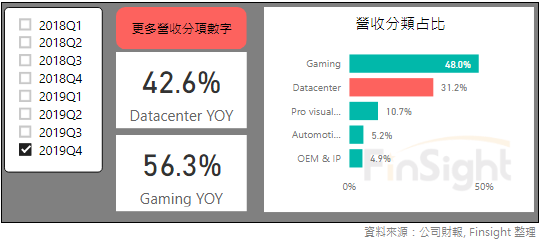
In the fourth quarter of calendar 2019, NVIDIA returned to strong growth in both data center and gaming. Quarterly data center revenue set a record, running 20% above the previous peak in 2018, and the segment is now 31% of company revenue.
There are risks. If the pandemic gets out of control and the economy lands in the worst recession scenario, weak corporate profits could force the large buyers to cut capital spending. And while internet usage is up during the outbreak, online ad spending has gone down, which suggests companies are cautious about their own outlook and are trimming ad budgets. If that persists, cloud companies that live on advertising, such as Google and Facebook, may also invest less.
But NVIDIA's financial condition is strong, which leaves it better able to withstand a severe downturn. If the recession turns out shallower than feared, or the damage stays contained, the company still sits in a very favorable spot in the AI ecosystem, and a strong data center business is still something to expect.