
Microsoft Teams usage in locked down Italy grew 775% in a week. Commercial cloud is near 30% of revenue and grew 38.8% in 2019.
Our March 2020 post on NVIDIA and the work from home bid running through its data center business made the point that on top of the AI breakthroughs and the applications already landing, the coronavirus outbreak has pushed more work onto data centers, and the message out of the GTC conference reflected that. The same shift is showing up in software. Remote work software as a service (SaaS) companies are posting explosive growth, and the clearest case is Microsoft, which we covered in The Subscription Series, Part 3 (December 2019) as the strongest SaaS franchise of them all after its move to the cloud. That result comes from years of building out commercial cloud, which now matters to Microsoft both for growth and for profit.
Key takeaways
- Microsoft said on March 28, 2020 that Teams usage in the locked down regions of Italy grew 775% in a single week, and that Teams now has more than 44 million daily users and 900 million daily meeting and call minutes.
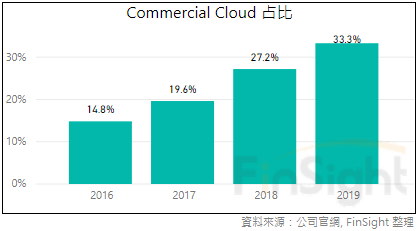
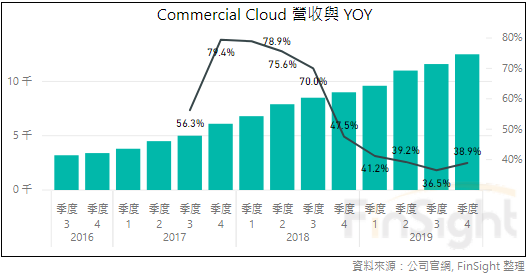
- Commercial cloud was close to 30% of Microsoft revenue in 2019 and grew 38.8% year over year, against 13.4% for total revenue. It is the main growth engine.
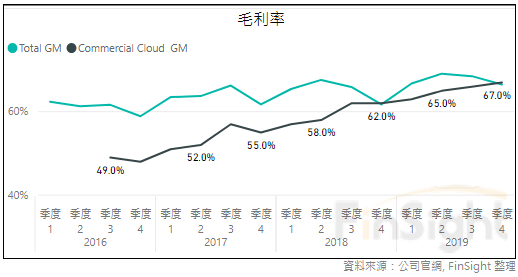
- Commercial cloud gross margin has climbed past the company gross margin to 67%, as the cost of the early buildout spreads over a much larger revenue base.
- The balance sheet is the cushion: $134.2 billion of cash and short term investments, $172.6 billion of total liabilities, and $39 billion of free cash flow over the past four quarters.
Remote work is accelerating the move to cloud, and Microsoft may be the biggest winner
Microsoft issued a profit warning on February 27, 2020: supply chain problems would hit Windows personal computing software and Surface devices in the March 2020 quarter, which Microsoft reports as its fiscal third quarter. Cloud and the other businesses went the other way and gained from the outbreak. In a company statement on March 28, 2020, Microsoft laid out how much usage had grown:
- In the locked down regions of Italy, Microsoft Teams usage grew 775% over a one week span.
- Teams put up striking numbers: as of the week before the March 28, 2020 statement, more than 44 million daily users and 900 million daily meeting and call minutes.
- Windows Virtual Desktop usage tripled.
- Government coronavirus dashboards built and published with Power BI saw usage rise 42% in the week before that statement.
Microsoft has spent the past few years widening its lead in commercial cloud. In 2019, commercial cloud was close to 30% of revenue and grew 38.8% year over year, against 13.4% for the company as a whole. Because Microsoft built early, the cost of that buildout now spreads over a much larger revenue base, so commercial cloud gross margin has kept rising and now sits at 67%, above the company gross margin.
An open Microsoft is ahead in the enterprise move to cloud
In The Subscription Series, Part 3 (December 2019), our post on Microsoft, we argued that the second round of the cloud fight gets decided on hybrid cloud. Once 5G lets a company gather and store data at the endpoint, it wants the critical data kept in house and kept secure, and it cannot let a dropped connection or extra latency interrupt operations. Security is the condition that decides the choice, and hybrid architecture is what the enterprise migration gets built around.
Microsoft has put serious money into security. Its own site says it employs 3,500 cybersecurity experts, invests $100 million a year, and has now put more than $1 billion into the field. Today 95% of the Fortune 500 use Azure, which suggests Microsoft is ahead in the fight for the enterprise move to cloud.
Zoom, the video conferencing company that has also seen demand surge with remote work, is in trouble on exactly that issue. Recent press reports said the iOS version of Zoom shared user data with Facebook without disclosing it in the privacy policy, and did so even for users with no Facebook account. According to press reports at the time, the UK Ministry of Defence was discussing whether to bar government departments from using the software. Microsoft's collaboration product, Microsoft Teams, has a chance to take share from that.
When the economy is bad, the advertising businesses get hurt
Not every cloud business benefits from the work from home trade. Facebook and Twitter have seen usage jump, but revenue is going the other way. With the global economy shut down and consumers pulling back, advertisers are having a bad year and are cautious on the outlook, so the advertising market is shrinking.
On March 22, 2020, Twitter withdrew its first quarter financial guidance because of the outbreak, and even with first quarter daily active users up 23% year over year, Wall Street analysts see revenue falling as much as 20%. On March 24, 2020, Facebook issued a warning of its own: live streams on Facebook and Instagram have doubled and time spent on Facebook is up 70%, but the company said the advertising business is weak because of the pandemic.
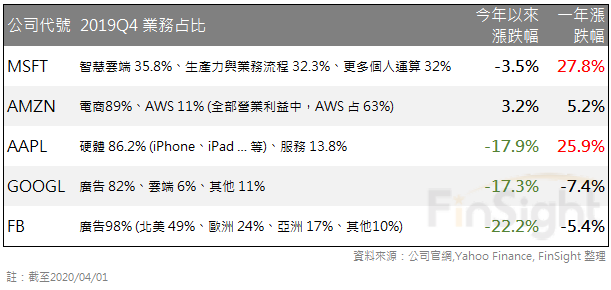
Set Microsoft's stock against the other large cap tech names and the price reflects where it sits in cloud. Over the past year, Microsoft is up 27.8%, slightly ahead of Apple, which had the iPhone 11 selling well in 2019. Year to date, Microsoft is down only 3.5%, roughly in line with Amazon's 3.5%, the other cloud company gaining from the short term shift to remote work. The names exposed to a weak economy through advertising (Facebook, Google) and consumer electronics (Apple) are all down considerably more since the start of the year.
Microsoft's financial condition is strong and its cash flow is steady
The way this outbreak is developing, we will probably see rising unemployment and more company failures in the near term. The healthier the balance sheet, the easier it is to get through this economic shock and to come out of the next recovery holding a stronger commercial position. Microsoft carries about $134.2 billion of cash and short term investments against $172.6 billion of total liabilities, so the balance sheet is not stretched. Free cash flow ran $39 billion over the past four quarters, and the subscription model keeps it steady.

Over the long run, with the enterprise move to cloud still accelerating, Microsoft is strengthening its own software through open partnership while pushing hard on the one condition hybrid cloud requires: security. In the near term, work from home demand is lifting cloud usage, and it is also speeding up the enterprise migration itself.
TSMC founder Morris Chang has said the pandemic will change the way people live, and we think Microsoft is one of the companies that benefits. What we will be watching is whether commercial cloud keeps growing near the 38.8% it did in 2019 once the first rush of remote work has passed, and whether Teams holds on to the users it has just added.