Analysts see S&P 500 capex growing 12.6% in 2022, ahead of 10.6% operating profit growth, and the money is going into digital transformation.
The Data Driven Tech Revolution, Part 1, our April 2021 post on Applied Materials' analyst day, worked through how the explosive growth in data volume created a large opportunity for the semiconductor industry and drove two years of sharply higher capital spending at chip makers. Because the demand created by data shows up in the cloud first, every high performance computing vendor (Intel, NVIDIA, AMD, Marvell and others) has been reworking its strategy around the new chip demand that data driven workloads bring.
Key takeaways
- Analysts now expect S&P 500 capital spending to grow 12.6% in 2022, ahead of 10.6% growth in operating profit, and the upward revisions are unmistakable.
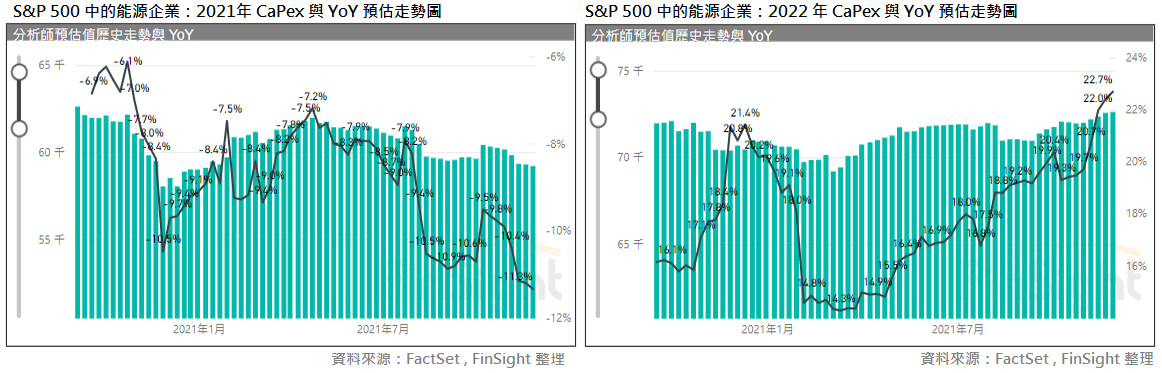
- The added spending sits in consumer, technology and health care, and it is aimed at digital transformation. Energy companies in the S&P 500 are the counterexample: their capital spending (capex) estimates have barely moved all year.
- Morgan Stanley's July 2021 work calls enterprise IT spending a super cycle heading into a golden decade, with IT rising from 28% to 32% of total corporate investment through the pandemic.
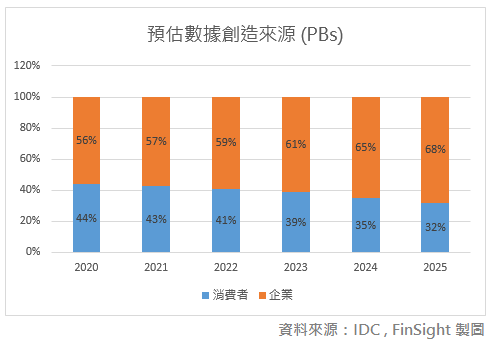
- IDC (International Data Corporation) expects enterprises to go from 56% of the data created in 2020 to 68%, and that is the natural growth in data volume that keeps semiconductor demand rising.
Through this whole stretch we have kept making the same point: the high performance computing era will not run on the same demand the consumer driven mobile era ran on. What matters now is corporate investment.
This post comes at that from the end demand side: why we think corporate digitization is speeding up, and why that gives semiconductors a long run of natural growth in data volume.
US earnings show companies spending more, and digital transformation is the target
Since the pandemic, profitability at US companies has kept improving. The most striking part of the previous quarter was that the large caps raised capital spending together, and in the most recent quarter that spending accelerated further.


On 2022 estimates, analysts now look for total capital spending to grow 12.6% year over year, ahead of the 10.6% growth they expect in operating profit. The upward revisions are unmistakable. On the most recent quarter's estimates, the sectors adding spending next year are mainly consumer, technology and health care, and the investment is aimed at digital transformation.

Non-tech sectors look nothing like that. Their capital spending in this quarter's filings shows no meaningful change. Energy companies in the S&P 500 are the clearest case: their capex estimates have not been revised up all year the way other sectors have.
Morgan Stanley argued in a July 2021 report that enterprise IT spending is entering a super cycle and a golden decade. Their main points:
- Corporate investment looks like the internet era of the 1990s, and the push is coming from outside the technology departments. The industries willing to accelerate IT investment now are retail, education, health care, financials and industrials. Over the next ten years, technology investment by non-technology companies surges, on a scale similar to the internet era.
- The latest survey of chief information officers (CIOs) shows companies paying steadily more attention to technology investment. IT is estimated to have gone from 28% to 32% of total corporate investment through the pandemic.
- Spending at a record high means the productivity technology creates is entering a super cycle, and the companies that catch the trend separate themselves from the field. Set against the internet build-out, digital transformation is early, and the long uptrend still has room to run.
- Two groups benefit: the technology providers and the technology adopters. The companies that move first on digital transformation should run more efficiently and earn more, and they become the leaders of their industries, because moving first puts pressure on competitors to follow. The providers, the picks-and-shovels sellers, tend to post the bigger gains early in an industrial revolution.
IDC also expects enterprises to become the main creators of data, rising from 56% in 2020 to 68%. Over that same stretch of earnings, we have kept hearing the large cloud companies say that commercial cloud demand from enterprises is up sharply.
Digital transformation is no longer a choice, it decides whether a company survives
Looking at what technology enables, we think the key difference between the past ten years and the next ten comes from a change in the nature of end demand.
- The past ten years: the mobile internet era, which changed how consumers live (business to consumer, or B2C). Streaming, e-commerce, social platforms and the rest turned daily life upside down and changed how people spend, the sharing economy took off, and a new set of giants was created. Because those giants run their businesses on the cloud, they drove a decade of growth in public cloud.
- The next ten years: the data revolution, which changes process design inside companies (business to business, or B2B). Working data harder pulls more operating value out of it. Raising sales, cutting internal costs, shifting spending from capex to operating expense: all of it makes a company more efficient and more flexible, lowers cost and raises profit.
On competitive grounds, the companies that embrace digital transformation first become the winners, and that changes the basis of competition. For most companies, embracing it is what the era demands.
IBM said at its Think conference in 2019 that enterprise transformation was entering its second chapter, and that 80% of work would move fully to the cloud. Today the capital spending data shows the fire has been lit, and companies are rethinking and redesigning how they operate after the pandemic. At the same time, by one estimate less than 2% of data is being handled properly, while 5G, autonomous driving, the industrial internet of things and hyperscale computing keep pushing AI usage higher.
BMW used NVIDIA Omniverse to simulate 31 factories and raised planning efficiency by 30%. The cost that takes out is money BMW can put to work in the next round of competition, and it puts pressure on rivals to take cost out of their own plants.
Our view: digital transformation works its way through every industry over the next few years, and the companies that do not transform get pushed out faster. That change in the nature of demand reverses the old business logic built on consumer spending. As long as companies can deliver better service, generate more revenue and earn more profit out of the transformation, they will keep wanting to spend more on IT and keep working to pull more value out of their data.
Semiconductor businesses are changing in character, and the market should reprice them
When people talked about technology revolutions in the past, most of the attention went to software, and they underrated the fact that even great software has to run on great hardware. With companies accelerating into digital transformation, the explosion in data makes the value of high performance computing and transmission hardware stand out.

The heavy expansion in semiconductor capital spending over the past two years reflects three things:
- Pandemic driven demand ran ahead of supply, which produced a year and a half of shortages in semiconductor products.
- Semiconductors now carry strategic weight, and governments want production localized.
- The long term megatrend: the structural change that comes with the data driven opportunity.
The short term demand spike and the new supply coming online should balance out over the next year or two. Localized production raises total production cost. The more important point is that over the long run, the explosion in data volume keeps semiconductors growing steadily.
At the same time, we see the operations of many large semiconductor companies changing in character. Their growth sources and business lines are more diverse, and software and subscription are a rising share of the mix.
- NVIDIA is using a complementary goods effect, selling software and virtual platform applications to drive sales of the related hardware.
- At Applied Materials, long term subscription is a rising share of revenue, and the company thinks that will make long run profit more stable.
- Handsets are a smaller share of Qualcomm and MediaTek than they used to be, with AI and internet of things demand picking up.
- TSMC offers customers one stop integrated service from front end design to back end packaging, which raises the value added of the product.
Jensen Huang said at NVIDIA's 2021 GTC that what was science fiction twenty years ago and a dream ten years ago is being built today.
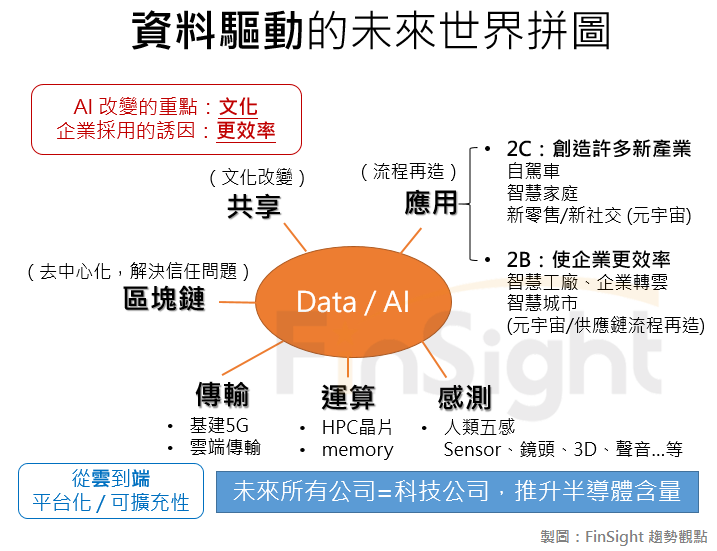
We believe that as industries across the economy take on the growth in data volume through digital transformation, they keep driving an industrial revolution powered by exploding data. In the end that makes every company a technology company, and it raises long term demand for semiconductors.