
AMD is buying Xilinx because compute is moving into the data center. Management sees the combined company growing more than 20% a year, versus Xilinx's 15%.
In our October 2020 two-part series on TSMC's 3D packaging, we argued that TSMC's lead in that technology is durable. This post is about who on the customer side captures the most from it, and the answer is AMD. We have written repeatedly about the other winner, NVIDIA, so we will not repeat that work here.
Key takeaways
- By our tally, announced semiconductor deal value in 2020 is the highest since 2016, and almost all of it points at the data center: NVIDIA bought Mellanox in 2019 and agreed to buy ARM in 2020, AMD is buying Xilinx, and Marvell is buying Inphi.
- High performance computing (HPC) is already 37% of TSMC revenue and is growing faster than the company average, which puts it on track to pass smartphones as TSMC's largest platform by 2023.
- Two worries dominate the deal chatter: the Intel and Altera precedent, and AMD's own acquisition record. Neither scares us. AMD and Xilinx both run their leading edge at TSMC, and this management team has already proven it can ship new products on schedule.
- AMD expects the combined company to grow revenue more than 20% a year long term, above Xilinx's standalone 15%. Communications is close to 40% of Xilinx revenue, an end market AMD does not touch today.
A year of large semiconductor deals, all aimed at the data center
The cloud, and the silicon underneath it, is where the money is going.
Data center demand keeps migrating out to the edge, and over the past two years rising AI workloads and expanding customer demand have changed the character of that demand, with a direct effect on chipmaker profits.
Cash flow at technology companies also rose noticeably after the pandemic, which could speed up acquisitions, buybacks and dividends. What we like best is seeing strategic M&A, companies repositioning themselves for how competition is going to change.
The recent run of deals puts announced semiconductor deal value in 2020 at the highest since 2016. NVIDIA's purchase of Mellanox in 2019 and its agreement to buy ARM in 2020 are both about a bigger say in high speed computing products for the data center. The more recent deals, AMD buying Xilinx and Marvell buying Inphi, are about broadening the data center product line.
Data center revenue is an important growth driver for every one of these companies, and NVIDIA, AMD, Xilinx and Marvell are all TSMC partners at 7nm and below.
On its earnings call this quarter, Xilinx stressed that its data center business keeps winning orders from large cloud customers, and that with 2020 data center spending driven mainly by replacement, SmartNICs (smart network interface cards, which offload and speed up data movement) have become the top priority.
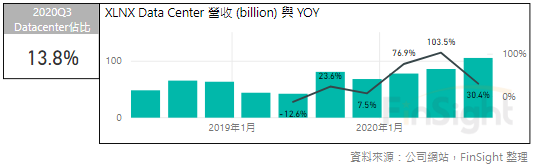
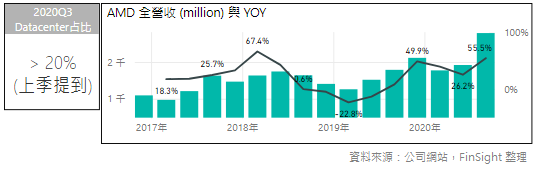
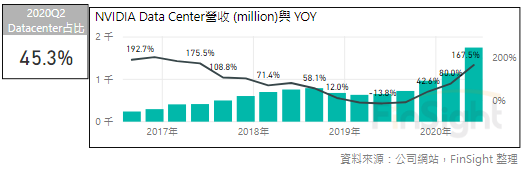
On its own call, TSMC named the businesses it expects to grow faster than the company average: high speed computing chips, 3D packaging and advanced process nodes. HPC is already 37% of TSMC's revenue, and if it keeps growing faster than the company average it has a chance to pass smartphones as the largest platform by 2023. TSMC also said that when 3nm goes into volume production in the second half of 2022, both smartphone and HPC customers will use it. That is different from past nodes, where the first year of a new process belonged to smartphone customers only.
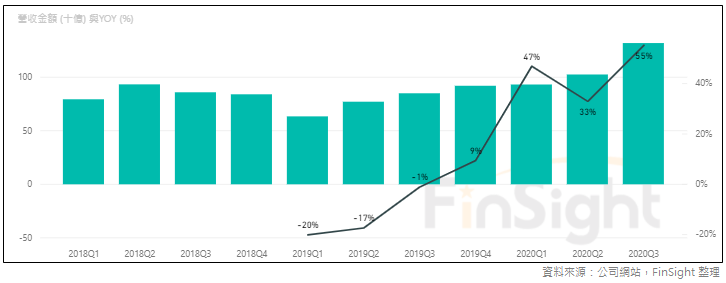
In that environment, Intel faces several problems at once:
- Rivals are taking share fast enough that the price war shows up in Intel's reported numbers.
- The traditional CPU market keeps getting displaced by HPC chips built on advanced nodes and 3D packaging.
- Intel's own progress on advanced process nodes, and its ability to run them at volume, is still unresolved.
Intel did stress on its call that in January 2021 it will confirm how to handle its 2023 products, whether to build them in house, outsource them, or do both. Either way, share gains at Intel's competitors alone push TSMC's HPC revenue higher.
AMD is building a stronger competitive position, and we view the Xilinx deal positively
We think AMD's decision to buy Xilinx fits where semiconductors are heading.
Our read of AMD CEO Lisa Su's packaging comments on the call: the single die era is ending, and everything from here gets packaged out of pieces. From a market point of view this deal adds up to more than the sum of its parts. The current Xilinx CEO also came out of AMD, the two companies agree closely on where the main markets are going, and both keep working on open platforms for software acceleration.
Two worries have dominated the market reaction to the deal:
- Intel bought Altera and got little out of it. That was mostly because Intel's own foundry held back Altera's move to advanced nodes, which let Xilinx own 16nm to itself for a long stretch. AMD and Xilinx both use TSMC for their leading edge work, so this should not be much of an issue.
- AMD's past acquisitions went badly. Plenty of people in the market distrust management for restarting deal making just after finally bringing debt down. Our view is that today's AMD has the ability to keep launching new products, built on TSMC's advanced nodes, and that the current CEO has already led a successful turnaround, including the switch of foundry partner. So we are positive on this deal.
The two businesses and their customers are complementary.
In the data center, AMD is focused on compute acceleration with CPUs and GPUs, while Xilinx sits on the transport side with SmartNICs. Communications is also close to 40% of Xilinx revenue, an end market AMD has never been in, and the deal buys AMD a position there rather than making it build one.
Overall, AMD expects the combined company to grow revenue more than 20% a year over the long term. That is roughly in line with what AMD had guided on its own, but above Xilinx's long term growth of 15%, which tells you management expects synergy from the deal.
Exponential growth in the digital revolution will widen the leader's advantage
Back in 2017 NVIDIA CEO Jensen Huang described AI development as exponential: AI was eating software, and anyone moving too slowly would be out. He put the industry in the first inning, said each inning from there would run faster than the last, and warned that anyone not in on deep learning by the second or third inning was done.
Chip development compounds the same way, so the leader's advantage keeps getting more visible and the pressure on everyone behind keeps getting worse. Our view: TSMC holds the key process technology, AMD builds its products on those nodes and compounds alongside it, and with AMD still taking share and the Xilinx deal looking like the right move, we like its chances of holding a more important position in the HPC market.