AI has run three innings since 2016. In the third, from 2022, end demand still has no proven model, and only NVIDIA and Microsoft compound their lead.
Our first post in this series looked at the AI industrial revolution that started in 2016. It created business models with no real precedent, shifted where the profit sits inside the technology industry, and had already shown up in the financials.
What that post found:
- Total technology revenue, profit and capital spending all moved onto a clear growth trend after 2017.
- Growth leadership moved from hardware to software and semiconductors.
- Spending moved from consumer to enterprise.
- Vendors moved from selling products to selling services.
- Innovation moved out of the core organization and into open, shared communities.
- Use cases became cloud-first, and the search was for entirely new solutions.
Key takeaways
- AI has run in three innings since 2016. In the first, 2016 to 2018, every company had a shot. In the second, 2019 to 2021, the field thinned. In the third, 2022 and after, the list of winners keeps getting shorter.
- The first inning was announced from the podium: Jeff Bezos on machine learning in his April 28, 2017 shareholder letter, Sundar Pichai moving Google from mobile first to AI first on May 18, 2017, and Microsoft redefining itself around cloud plus AI on May 10, 2017, followed by an April 2018 reorganization that dissolved the Windows division.
- The second inning knocked companies out: consumer software with no platform advantage, and Intel, which kept losing share to the TSMC alliance, meaning TSMC and its fabless customers, once chips had to be built around data.
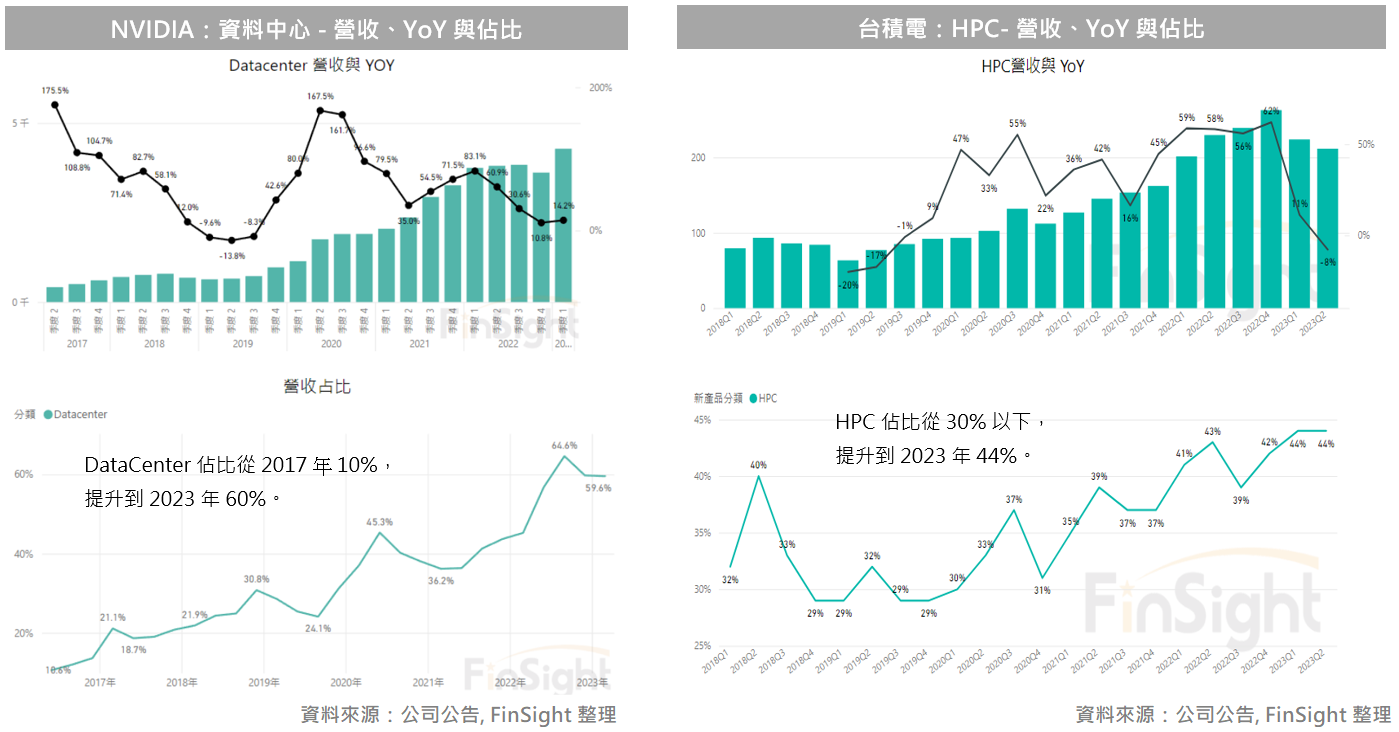
- The third inning is different. End demand has no proven business model yet, so this is not a rising tide that lifts everyone. Only two names hold a clear virtuous cycle today: Microsoft, which can put generative AI into an existing product line and raise average revenue per user (ARPU), and NVIDIA, which sells the compute.
With data exploding, computation getting harder, and the capital required rising sharply, the companies already in front fall into a virtuous cycle. That is the point of the photon analogy NVIDIA CEO Jensen Huang used in 2017: the leaders travel at light speed and everyone else stands there watching them go. Because AI advances exponentially, the race widens the leaders' advantage as it runs, and by the time the game reaches the third inning, the companies that moved too slowly and never got on board deep learning are out. He framed the race as innings of a baseball game, and the calendar dating of those innings is ours, not his, as we set out in Part 1.
We think that is a fair description of the AI industrial revolution since 2016. Generative AI in particular has pushed the competition into a new inning. The market is full of expectations about future applications, the virtuous cycle around a small number of leaders keeps getting more visible, and at the same time the pressure on everyone behind, both to catch up technically and to monetize an ecosystem, keeps building.
This post walks back through the three stages of the AI trend since 2016. That is how you see why we think the leaders get fewer once the third inning starts.
The first inning (2016 to 2018): the trend opens, and hope is everywhere
We split AI's development into three stages, and the first, when the trend opened, ran from 2016 to 2018. The financial data in our first post shows technology moving onto a clear growth track from the middle of 2016.
You can see a big trend opening when the bellwether companies change their own goals or make a defining move. Take the arrival of mobile in 2007:
- Apple: on January 9, 2007, alongside the iPhone launch, Steve Jobs changed the company name from Apple Computer to Apple, marking the arrival of the mobile device era.
- Google: launched Android in 2007, developed and improved it with 84 handset alliance partners, then open sourced it to speed adoption, moving fully into a mobile first world.
In 2017, as AI started to take off, more and more of the big cloud software vendors used their annual conferences or shareholder letters to stress how important it was to invest in AI and put it into their own products:
- Amazon: on April 28, 2017, Jeff Bezos wrote in his shareholder letter that technology trends are not hard to spot, but that embracing them is not easy for a large company, and that machine learning and artificial intelligence are the important trend of the moment and where Amazon has been putting its effort for years. Prime Air delivery drones, the Alexa voice assistant and Amazon Go were all practice runs in machine learning.
- Google: at the I/O developer conference on May 18, 2017, CEO Sundar Pichai rewrote the core slogan from mobile first to AI first, saying every Google service and every bit of it is artificial intelligence. It signaled that AI would drive Google from there and pull every product through a transition. Google also launched its second-generation TPU deep learning processor at the same event.
- Microsoft: at Build on May 10, 2017, Microsoft redefined itself around cloud plus AI. In April 2018 it went further and redrew its revenue structure, breaking with tradition, dissolving the Windows division and splitting the company into three groups: Cloud + AI, the intelligent cloud and Microsoft's future (Azure, servers, databases, customer relationship management (CRM) and enterprise resource planning (ERP)); Experiences and Devices, the intelligent edge (Windows, Office 365, Skype and Surface); and AI + Research, which builds the new technology (VR, AR, Bing and Cortana).
That was a hopeful time, right at the start of a new industrial revolution.
When the major US cloud vendors and China's BAT (Baidu, Alibaba and Tencent) all declared for AI in the second quarter of 2017, AI became the way to strengthen what the big vendors already sold: make the existing software services more effective, widen the market, and take more growth out of it.
Huang's version of it: AI is eating software and will end up in every part of software. He said every software developer would have to learn deep learning and apply machine learning, and that it would not stop with individuals, because every company would end up using AI. He said it mattered as much as the invention of wireless communication.
After the software vendors declared for AI in the second quarter of 2017, the semiconductor companies followed NVIDIA. Through forums in September and October 2017 they lined up behind the view that AI would drive the next decade of high performance computing growth, and they discussed how much it would change the way chips are designed and manufactured:
- TSMC: at its 30th anniversary technology forum on October 23, 2017, it put artificial intelligence at the center of the next decade of growth and said high performance computing (HPC) would replace handsets as its main growth driver.
- Applied Materials (AMAT): at its analyst day on September 21, 2017, it focused on the AI era, arguing that computing had entered a new age that would drive major changes in how logic and memory chips are designed and made, and would require new system architectures and computing models.
In the first inning, every vendor was gearing up for a once-in-a-generation opportunity. Technology was pushing into every industry, every cloud vendor was still taking share in its own market, and profits were still good, so you could watch the trend develop at a comfortable pace.
The second inning (2019 to 2021): the gap widens, then the pandemic blows demand wide open
In the first inning, the number of startups doing business on the cloud kept growing, from consumer, or business to consumer (B2C), to enterprise, or business to business (B2B), from the US to China, all using new internet business models to eat the old markets. On the consumer side, the game moved from winning traffic to monetizing it, and the vendors that had built a second revenue engine in public cloud (Amazon, Microsoft, Google) saw growth accelerate. On the enterprise side, more and more companies started spending to move to the cloud, which created a large opportunity in enterprise software applications (Salesforce, ServiceNow, Workday, Adobe and other B2B software as a service (SaaS) names).
Then, from the end of 2018, the consumer side started running into trouble.
As mobile device penetration rose and the growth in time spent online slowed, the traffic windfall for software platforms faded and profitability slowed noticeably. Everyone started to see that for consumers, time is the scarcest resource. Subsidies bought traffic, not lasting profit, and much of that spending never earned itself back. With profitability at many consumer companies still sliding, the big platforms started crossing into each other's territory to offer one-stop services and try to create new use cases.
Consumer software platforms worked hard to break the deadlock, looking for more data and more diversified revenue:
- Hardware and software together, to capture more user data. 2019 had a run of interesting launch events. Amazon, Microsoft and Google all held hardware events in September and October, hoping smart devices would give them more consumer usage data. Apple went the other way and held its first launch event with no hardware, trying to lift the services share of revenue with a broader software offering.
- Crossing into new services to raise platform value. Apple launched Apple Card, Facebook Pay went live in the US, and Google teamed up with Citi to move into online banking, so all of them reached into financial services at once. Retailers started building up their advertising businesses, and voice assistants, blockchain, game streaming and the metaverse were all on the list.
- More than one way to make money, with subscriptions and third-party fees side by side. Google, mostly an advertising business, launched YouTube subscriptions, separating the ad audience from the subscription audience and becoming a platform that can price both sides.

While consumer software struggled, enterprise software kept benefiting from rising corporate capital spending and the continued move to the cloud. Cloud technology made companies more capable, and the ones that used cloud services first ran more efficiently. Mary Meeker's 2019 Internet Trends report also emphasized how fast enterprise cloud computing was growing, with companies continuing to raise software spending and, on top of public cloud, expanding their demand for hybrid cloud.
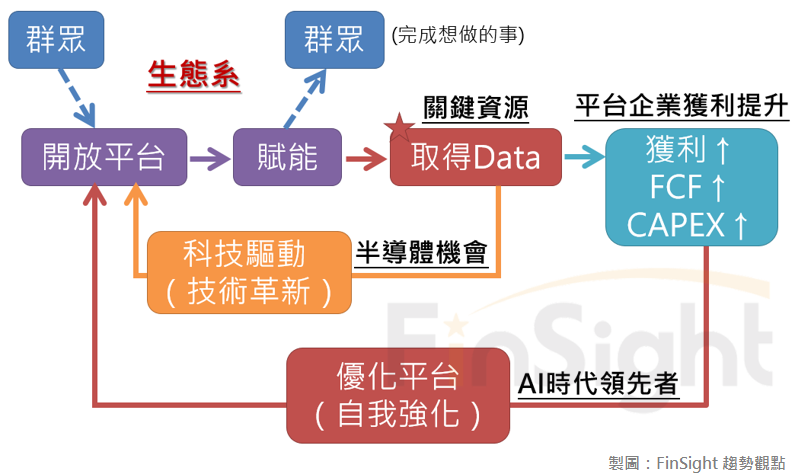
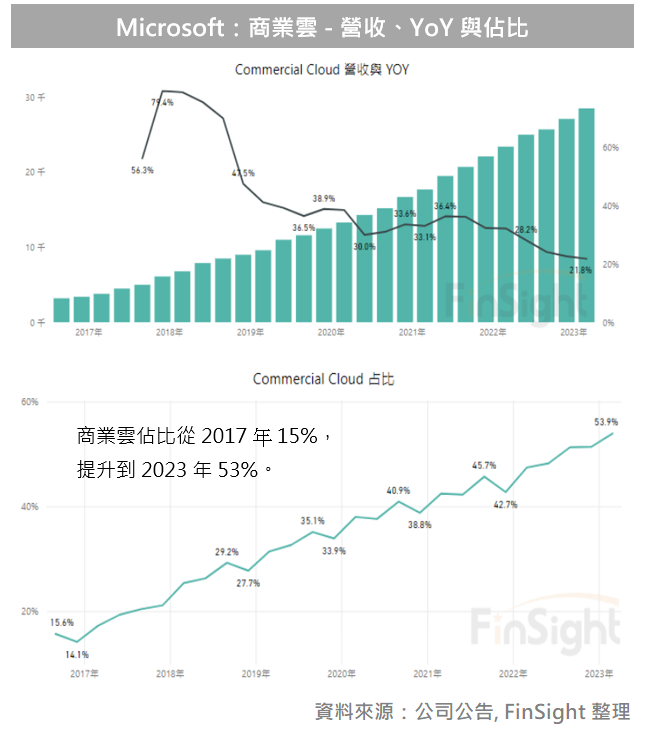
Software split along those macro lines, with B2C SaaS under operating pressure and B2B SaaS still growing. Semiconductors ran the same way: consumer growth slowed while enterprise demand pushed data center product specifications higher. Demand for better energy efficiency kept rising, and data centers needed new chips built around data on advanced process nodes. The major vendors all started making acquisitions to strengthen the relevant product lines. As chips got harder to build, Intel's competitive position deteriorated noticeably in this stage, and it had a very hard time against the TSMC alliance, losing share continuously. We covered that at length in our Data Driven Tech Revolution series (April to December 2021) and will not repeat it here.
In the second inning, as end market demand shifted, the pressure kept building on B2C SaaS companies with no platform advantage and on Intel, which could not deliver chips built around data. The pandemic pulled technology demand forward after 2020 and gave those companies a short break, but for anyone who did not use the moment to focus on the structural change and transform, the long-term problem did not go away.
The third inning (2022 to now): exponential AI growth turns into a fight only a few can win
ChatGPT came out of nowhere in late 2022, but so far, because accuracy in real use is still limited, not many companies have built a good business model on generative AI. Most of it is B2B SaaS vendors, led by Microsoft, putting it into services they already sell, offering a dedicated tier and raising the price per customer. Other cloud vendors are spending resources on it, but training costs for generative AI are extremely high, and right now this looks more like a capital race driven by fear of falling behind. A business model that raises corporate profits is still some distance away.
In semiconductors, the split between winners and losers is sharper still. Generative AI models are enormous and the compute demand is mostly training, so it takes GPUs that can be scaled up for machine learning. Even before ChatGPT, on a 2020 earnings call, NVIDIA said half of the demand for its data center products already came from language-related model training. The data volumes in those models are a different order of magnitude from traditional analytical AI, and that is a very large growth opportunity.
But with no clear business model visible at the end market, the industry as a whole has not entered a virtuous cycle yet. That is a real difference from the first two stages, where booming end applications lifted software vendors' profits, which in turn raised demand for the related hardware. So the gains will not be broad. The leaders' advantage will keep widening and will show up in both results and valuation, while the companies behind risk being displaced in a market that is not getting any bigger, which adds to the pressure on them.
Because so few companies have a clear business model in this third inning, we see only a small number of leaders holding a virtuous cycle: B2B SaaS with a complete ecosystem that can put generative AI into an existing product line and raise ARPU (Microsoft), and NVIDIA, the arms dealer selling the compute chips that make the rest of it possible.
Summary: the three stages of AI so far
First inning (2016 to 2018): the boom phase, when every industry and every company had a shot.
- Who played: every hardware and software vendor.
- Who extended their lead: companies in any industry with the data and the capital to keep investing in AI.
- Who fell behind: nobody yet.
Second inning (2019 to 2021): Intel and part of B2C SaaS were knocked out.
- Who extended their lead: B2B SaaS companies that had already built an ecosystem and entered a virtuous cycle (Microsoft, Google, Adobe, ServiceNow), and the HPC supply chain in the TSMC alliance that kept taking Intel's share (NVIDIA, AMD, TSMC).
- Who fell behind: B2C SaaS companies with no platform advantage, and Intel, whose chips were not built around data.
Third inning (from the ChatGPT launch in late 2022): NVIDIA's and Microsoft's advantages widen sharply.
- Who extends the lead further: NVIDIA, the arms dealer of compute, and B2B SaaS that can put generative AI into an existing product line to raise ARPU (Microsoft).
- Who falls behind: everyone outside that group.
Competition is a dynamic process, and leading now does not mean leading forever. But in a data driven AI era, the leaders really do hold a technology lead, can optimize an ecosystem more easily, generate steady growing cash flow, and own the key data that produces better products. That moat costs the followers far more effort to close.
Looking back at 2017, plenty of companies spotted the trend. Spotting it was not the hard part. Whether a company was standing in the right place in the end market (B2C or B2B), and whether it could execute (chips built around data, great products, a real ecosystem), is what decided whether it got on board the virtuous cycle of the AI era.
Jeff Bezos, Amazon's former CEO, put it this way: resist a trend and you are fighting the future, embrace it and the wind is at your back.