
Q3 2020 filings: Taiwan component inventory days fell from Q2, revenue rose 4% and profit rose 27%. A sell signal could come as early as Q2 2021.
In our October 2020 study of the Taiwan electronics inventory cycle, we argued that the bull leg in Taiwan stocks could run into the first half of 2021, and the reason was simple: the cycle was still in its bullish phase. Taiwan's third quarter 2020 filings were complete by the middle of November 2020, so this post checks whether the bull case still holds.
Key takeaways
- Inventory days at Taiwan electronics companies were a little above the year-earlier level in the third quarter of 2020 but down from the second quarter. Inventory is still healthy, and no sell signal has fired.
- We are keeping our view that the bull leg extends. On the cycle, the sell signal could show up as early as the second quarter of 2021.
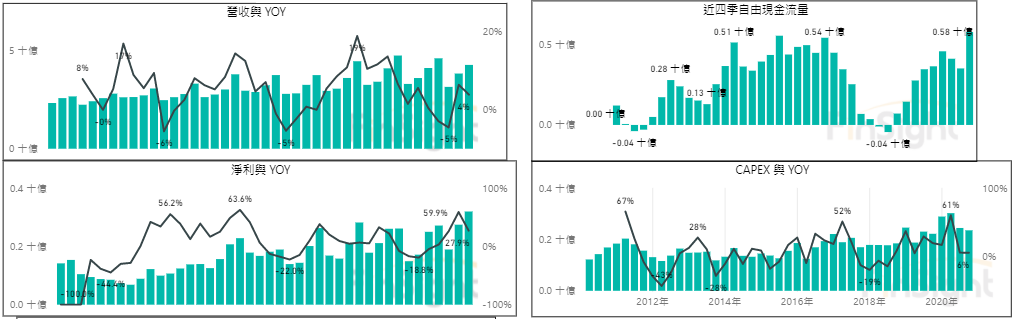
- Taiwan electronic component makers grew revenue 4% but grew profit 27% in the third quarter of 2020, and trailing twelve month free cash flow hit a record.
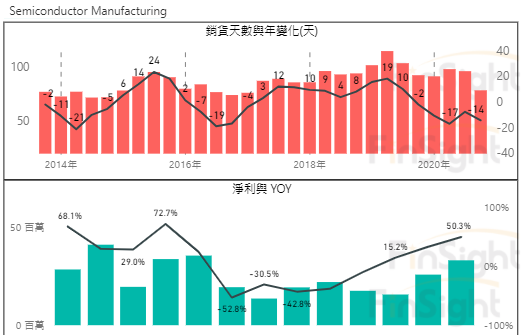
- Upstream chip design (IC design) houses, which design chips and outsource manufacturing, were the standout: inventory days fell 14 days from a year earlier and net profit rose 50%, with most designers still able to pass price through while parts are short.
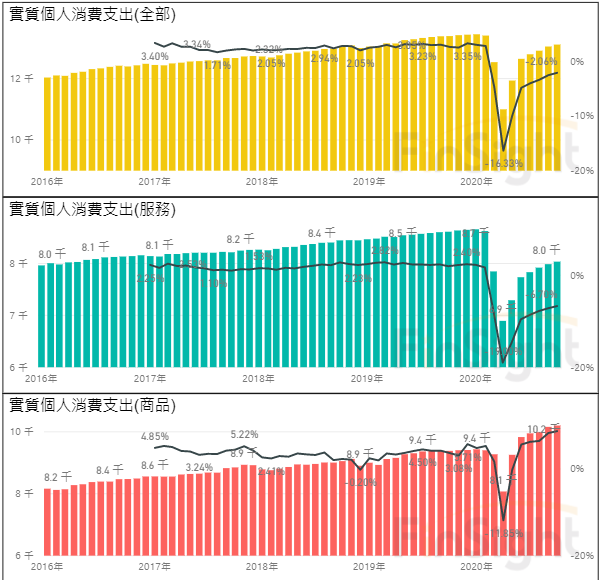
- US personal consumption expenditures in October 2020 show goods spending at another high, with the month over month increase bigger than September's, so the demand behind this cycle has not reversed.
Inventory days across Taiwan electronics are under control, and no sell signal yet
The third quarter 2020 filings show inventory days at Taiwan electronics companies slightly higher than the same quarter of 2019 and slightly lower than the second quarter of 2020. That leaves inventory healthy.
The rule from our October 2020 post: as long as inventory looks normal and new orders stay strong, the bull leg can extend. So we are keeping that view. On the cycle, a sell signal could show up as early as the second quarter of 2021.
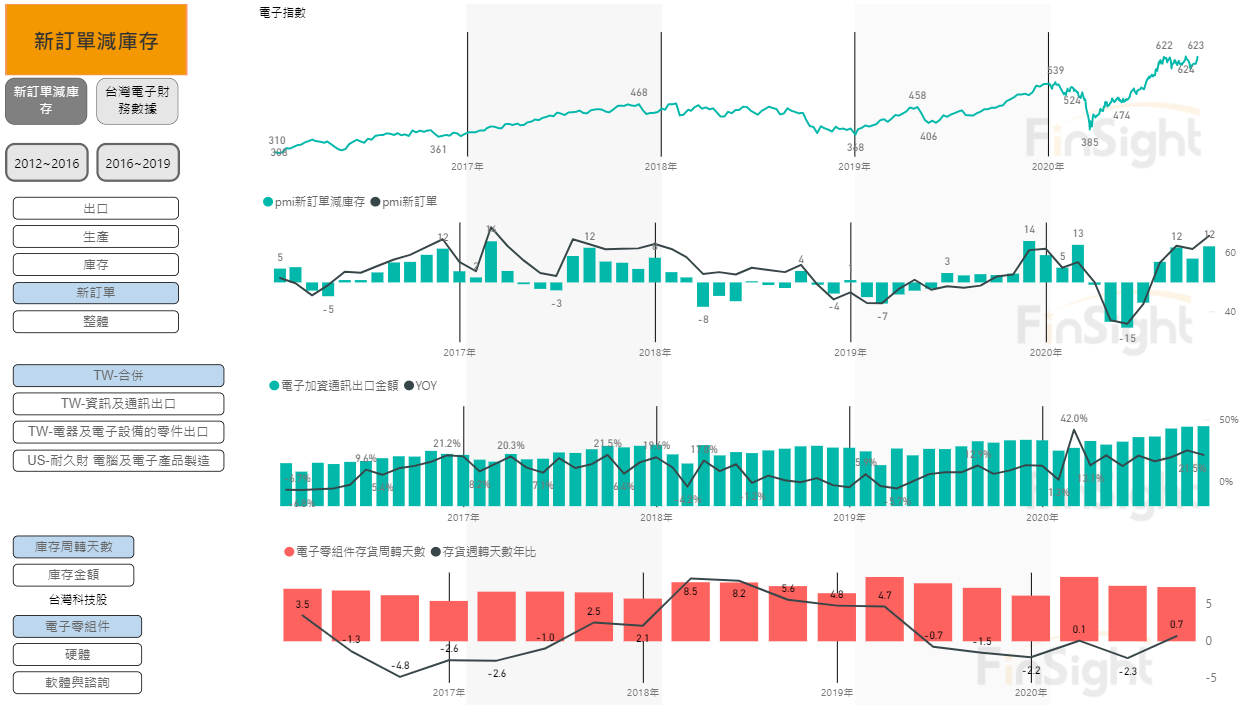
The electronics index is the TWSE electronics sector index. Taiwan's manufacturing PMI is the monthly purchasing managers survey published by the Chung-Hua Institution for Economic Research (CIER), and its sub-indices, like those of the ISM in the US, are diffusion readings centered on 50, so new orders minus inventories is a gap between two such readings rather than a level. ICT is information and communication technology.
The shift in the mix of consumer spending has kept goods demand strong, and with inventory at manageable levels, the supply chain stays capacity-constrained.
For now, as long as end demand absorbs these orders, the near term is fine. What we cannot ignore is that the tighter supply gets, the higher the odds that customers start double ordering, which would make the next inventory correction that much sharper. That is why the timing of the end of this bull cycle matters more, not less. If we see a clearer signal, we will write it up.
Profitability improved sharply, and trailing twelve month free cash flow hit a record
Pulling the filings together, Taiwan electronic component makers grew revenue only 4% but grew profit 27%. Profitability improved sharply, and trailing twelve month free cash flow was the highest on record.
Looking at the change in inventory days, the biggest drop came in upstream IC design, where inventory days fell 14 days from the same quarter of 2019 and net profit jumped 50%. With parts short, most IC design houses can still pass price through to customers. The one thing to watch is end sell-through and whether they secure enough foundry capacity.
US consumers kept buying goods in October, so the demand behind this cycle is intact
US personal consumption expenditures are what we see as the source of this wave of goods demand. Even with the pandemic worsening in October 2020, goods spending set another high, and the month over month increase was bigger than September's.
Having gone through the latest data, we do not think the logic behind the bull case has changed.
Our job as trend followers is to ride the dominant trend and to judge when it ends. The high performance computing wave TSMC leads and the bull cycle that goods demand created both still support the positions we hold.