
Texas Instruments is building inventory into the second half of 2020, Intel warns of a data center correction, and TSMC's own 2020 outlook is soft.
Earnings season is under way, and what the big chipmakers say moves Taiwan stocks. In our earlier post on TSMC's first quarter call (April 2020) we saw strength in the near term and risk further out. Texas Instruments' results carry the same signal.
Key takeaways
- Texas Instruments (TI) says customers pulled orders forward in early March to secure supply, that demand started slipping in April, and that it is still holding capital spending and capacity flat while inventory rises through the second and third quarters of 2020.
- Aggregate inventory at Taiwan's listed component makers, as of the December 2019 filings, is back down to end-2017 levels in absolute terms, so most companies are choosing to run normal production and build stock.
- TSMC's 2019 annual report gives its 2020 unit shipment estimates by platform: high performance computing down 5%, Internet of Things up 15%, automotive electronics down 11% to 13%, with smartphones down a high single digit percentage.
- Intel expects work from home strength in PCs and notebooks to fade in the second half of 2020, and warns of an inventory correction in data center after the heavy build that started in the third quarter of 2019.
- The risk is arithmetic: inventory built in the first half needs second half demand to clear it. Analyst estimates put the slowdown in TSMC's earnings growth in the fourth quarter of 2020.
Texas Instruments confirms that chipmakers will keep building inventory
Texas Instruments is a top ten semiconductor company, selling into industrial, automotive, consumer and every other kind of end electronics. Here is what came out of its earnings call.
- Near term, customers are pulling orders forward to build inventory. Demand jumped across most markets in early March as the supply chain worried about shortages and broken supply, and customers raised orders to make sure they were covered. Since April, that demand has been coming down.
- The near term outlook is uncertain, but operations are set to the long term view and stay unchanged. The company plans to hold capital spending and capacity where they are, and expects inventory to rise sequentially in both the second and third quarters of 2020. For second quarter guidance, with the pandemic cutting visibility into customer demand, it widened the range and used the financial crisis as the reference point.
TI's argument is that 2020 is not 2008. In 2008 the market was hot going into the financial crisis, orders disappeared overnight, and demand came back two quarters later. The company then spent a year and a half catching up to customer demand. In hindsight, customers overreacted in the moment.
In 2020, semiconductors have already been through the 2019 inventory correction, so stock levels are not high the way they were in 2008. And if you think the pandemic is a short term shock, you keep production normal so you stay flexible on supply to customers.
We think TI is saying what most of the industry is thinking. Near term there is supply chain uncertainty and orders moving between suppliers because of the US China trade war, but further out they see more 5G and AI applications coming. Add the 2019 correction and inventory that is not high today, and accelerating the build in the first half is what we are seeing across the board.
Semiconductor bull cycles start once inventory has been worked down, and they end when profits roll over
We used the inventory cycle as the bull and bear signal for Taiwan electronics and semiconductors in our earlier post on where the Taiwan electronics rally stood (January 2020). Taiwan's electronic components hold a central place in the global chain, so the inventory cycle is a good way to read the Taiwan Stock Exchange electronics sector index (the electronics index).
What that post said: what matters to investors is the direction of that change. When inventory days are falling year over year, that has usually been a good place to buy, and once they start rising again it is time to take risk down.

Aggregate inventory at Taiwan's listed component makers, as of the December 2019 filings, is still low, and in absolute terms it is back down to end-2017 levels. With stock levels that low, a lot of companies are choosing to run normal production and build inventory, and are not worrying about second half sales yet.
We are also seeing company profits start to improve, with capital spending and free cash flow beginning to rise.
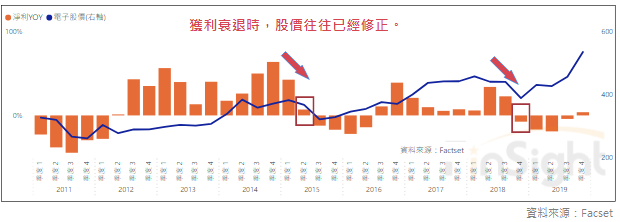
Go back to that January 2020 inventory cycle work and the sequence is clear. Companies only start building inventory because they believe end applications are growing and the outlook is good. The pressure to correct inventory shows up when profits turn down. So the timing of the next earnings downturn is the timing of the next inventory correction.
Take TSMC. On current analyst estimates, TSMC's earnings growth mostly starts slowing in the fourth quarter of 2020. On top of that, this year carries the pandemic's uncertain effect on consumption. If the second half consumer recovery disappoints while semiconductors are carrying high inventory, that is a real risk.
Restock in the first half means demand cannot stall in the second half
TSMC's annual report, released last week, gives the company's full year view of the industry. Beyond the high single digit percentage decline in smartphones it flagged on the earnings call, TSMC's 2020 unit shipment estimates for its other platforms are: high performance computing down 5%, Internet of Things up 15%, automotive electronics down 11% to 13%.
On high performance computing (HPC), TSMC wrote in its 2019 annual report that the platform covers personal computers, tablets, servers, base stations and game consoles. Unit shipments of major HPC products fell 4% in 2019, and the company expects HPC platform unit shipments to decline a mid single digit percentage in 2020. Several things still push HPC demand, including continued 5G base station deployment, growing demand for AI servers in data centers, and the launch of the next generation game consoles.
Intel, the other semiconductor bellwether, gave its own read on the industry at its first quarter 2020 earnings call on April 23.
1. PCs and notebooks. Work from home is a first half benefit, and PC and notebook demand stays strong into the second quarter. In the second half, the hit to the economy from the pandemic is expected to offset the first half strength.
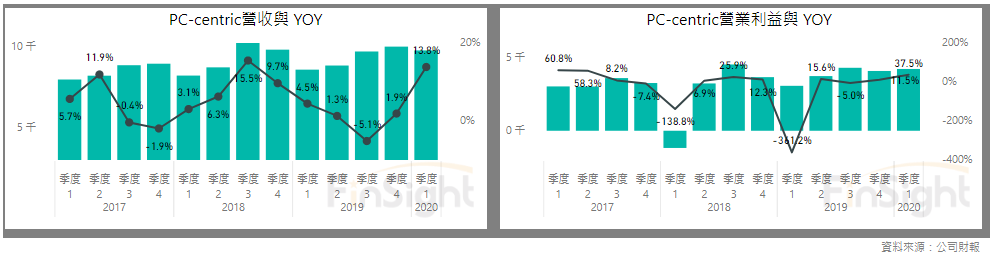
2. Data center. Growth hit a record. Intel thinks cloud customers stay strong into the third quarter of 2020, but it is seeing demand slow at enterprises and government agencies. And because data center has been building hard since the third quarter of 2019, the second half may bring an inventory correction.
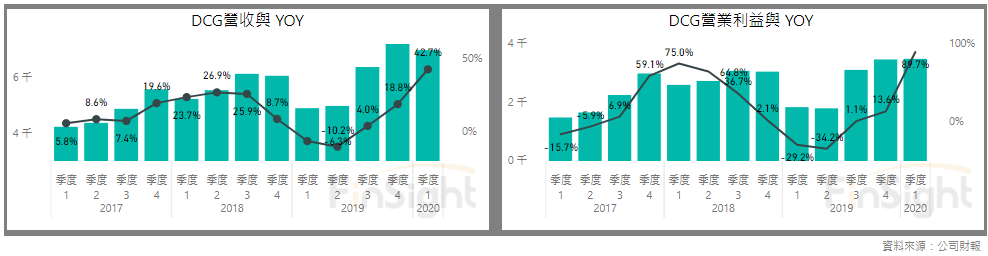
Neither TSMC nor Intel has much of a problem in the first half. As we wrote in our earlier post on TSMC's first quarter call (April 2020), where a strong quarter and a leading industry position sat alongside second half risk, these companies are mostly revising their full year industry outlooks down. So the orders pulled forward in the first half are exactly what creates the pressure to work inventory back down in the second.
One more thing to watch: the cloud companies reporting next week. Google and Facebook both put a very high share of their capital spending into data centers, and with the advertising business under enormous pressure, the near term risk is that they cut full year capital spending faster than the market expects.
Longer term we still think the pandemic accelerates technology innovation, and with AI and 5G reshaping how people live over the next five years, technology stocks remain our first choice.